Skip to Content
Transformer Application

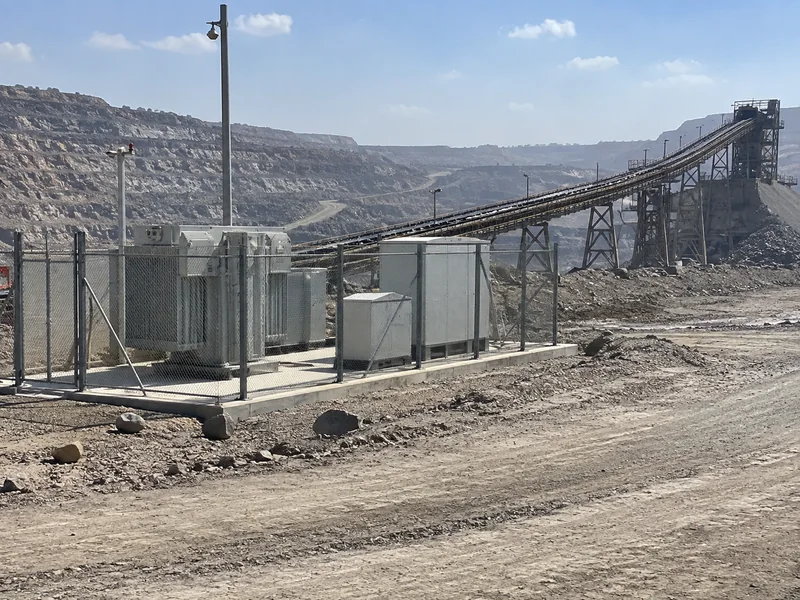
Transformers for Mining

Transformer solutions for mining sites, mineral processing plants, conveyors, crushers, pumps, ventilation systems, and remote substations.

We help mining companies, EPC contractors, and electrical consultants select suitable oil immersed or dry type transformers for harsh environments, heavy loads, and difficult site conditions.

Mining Power Distribution Oil Immersed Transformer Harsh Environment Design Heavy Load Operation Corrosion Protection Enclosed Dry Type Option
Selection for Harsh Mining Environments
Oil Immersed Transformers for Mining Sites
Dry Type Options for Indoor or Special Areas
Support for Shock and Fluctuating Loads
Attention to Transport and Mechanical Strength
Documentation for EPC and Mine Approval
View Products
Image Coming Soon
00 / Quick Answer AI-Ready

Page Summary For Buyers & AI Assistants

Mining projects usually use oil immersed transformers for outdoor substations, heavy loads, mineral processing plants, and remote power distribution because they provide practical thermal performance and high-capacity options. Dry type transformers may be used in indoor electrical rooms, control buildings, workshops, or fire-sensitive areas. Selection should consider dust, humidity, high temperature, impact loads, motor starting, corrosion, mechanical strength, transport conditions, maintenance access, short-circuit withstand, and project specifications.

01 / Industry Demand

Why This Industry Needs Transformers

Mining operations require transformers to supply reliable power to crushers, conveyors, hoists, pumps, ventilation fans, grinding mills, flotation systems, dewatering equipment, lighting, workshops, control systems, and accommodation facilities. Many of these loads are large, motor-driven, and subject to frequent starting, load fluctuation, or mechanical shock.

Compared with ordinary industrial plants, mining sites often face harsher environmental and logistical conditions. Transformers may operate in dusty areas, high humidity, high ambient temperature, corrosive atmosphere, remote locations, high altitude, or areas with limited maintenance access. Transportation to site may also involve rough roads, long distances, limited lifting equipment, or difficult installation conditions.

A transformer failure in a mining project can stop production, interrupt material handling, affect safety systems, and cause significant financial loss. Therefore, transformer selection should be based on real operating conditions, not only rated voltage and capacity.

Supplying Heavy Mining Equipment

Mining sites use large motors, crushers, conveyors, pumps, mills, ventilation fans, hoists, and processing equipment. Transformers provide the required voltage level and capacity for stable power distribution across the mining operation.

Handling Impact Loads and Motor Starting

Crushers, conveyors, pumps, and hoists may create high starting current, sudden load changes, or impact loading. Transformer capacity, impedance, voltage regulation, and short-circuit withstand should be reviewed carefully.

Operating in Dusty and Harsh Conditions

Mining environments often include dust, moisture, vibration, high temperature, corrosive materials, and outdoor exposure. Transformer tank design, enclosure protection, cooling method, coating system, and accessories should match site conditions.

Supporting Remote and Difficult Maintenance Sites

Many mining sites are far from service centers and have limited maintenance resources. Transformers should be selected with practical maintenance access, monitoring options, robust construction, and suitable spare parts planning.

Reducing Downtime and Production Losses

Unexpected transformer failure can stop production lines, material transport, dewatering systems, or ventilation equipment. Proper selection, testing, and protection coordination help reduce operational risk.

02 / Power Architecture

Typical Power Flow Structure

A typical mining power system starts with utility supply, diesel or gas generation, renewable hybrid supply, or a dedicated transmission line. Power is then distributed through substations, transformers, medium-voltage switchgear, motor control centers, variable frequency drives, and local distribution panels.

Transformers may be installed at main mine substations, processing plants, conveyor stations, pumping stations, underground or surface facilities, workshops, accommodation areas, or remote load centers. The transformer arrangement depends on mine layout, voltage level, equipment location, load size, and site development plan.

01

Utility, Generator, or Hybrid Power Source

Mining sites may receive power from the utility grid, on-site generators, renewable energy systems, or a hybrid power plant depending on site location and infrastructure.

02

Main Incoming Switchgear

Incoming switchgear provides protection, metering, isolation, and feeder control for the mining power system.

03

Main Power Transformer

The main transformer steps voltage up or down according to the mine distribution system, such as medium-voltage distribution for remote load centers or low-voltage distribution for local equipment.

04

Medium-Voltage Distribution Network

MV feeders supply processing plants, crushers, conveyors, pump stations, ventilation systems, workshops, and remote substations across the mining site.

05

Local Distribution Transformers

Local transformers step voltage down for specific mining loads, auxiliary systems, lighting, control equipment, and service facilities.

06

MCC, VFD, and Motor Loads

Motor control centers and VFD panels supply crushers, mills, pumps, conveyors, fans, hoists, and other motor-driven mining equipment.

07

Auxiliary and Safety Systems

Power is also distributed to lighting, control rooms, dewatering systems, ventilation, communication, fire protection, workshops, and accommodation areas.

Engineering Notes

In mining power systems, transformers may be located at the main substation, near processing equipment, beside conveyor systems, at pump stations, or inside electrical rooms. Their design must be coordinated with motor starting requirements, short-circuit levels, protection settings, cable lengths, grounding system, environmental conditions, and maintenance access.

Oil immersed transformers are commonly used for outdoor and high-capacity mining applications. Dry type transformers may be used in indoor rooms, enclosed electrical buildings, mobile substations, workshops, or special areas where oil-free operation or fire safety is required.

03 / Selection Logic

Oil Immersed vs Dry Type

Transformer selection for mining projects should begin with load type, site environment, and installation conditions. A mining transformer must be reviewed for heavy motor loads, impact loading, continuous duty, dust, moisture, high temperature, corrosion, vibration, altitude, transportation constraints, and maintenance difficulty.

Oil immersed transformers are often the main choice for mining substations and outdoor power distribution because they can support high capacity, practical cooling, and rugged site applications when properly designed. Dry type transformers are suitable for indoor or enclosed areas where oil-free operation, lower routine maintenance, or fire safety considerations are important.

Oil Immersed

When It Fits

Oil immersed transformers are suitable for mining projects where the transformer is installed outdoors, in a main substation, near a processing plant, at a pump station, or in a remote distribution area. They are commonly used for heavy-duty loads, high-capacity power supply, and continuous operation.

For mining applications, oil immersed transformers can be configured with robust tanks, radiators, corrosion-resistant coating, oil temperature indicators, winding temperature indicators, pressure relief devices, oil level indicators, Buchholz relays where applicable, and marshalling boxes. These accessories support monitoring and protection in demanding environments.

However, mining sites may involve dust, humidity, high temperature, mechanical vibration, rough transportation, and difficult maintenance access. Oil containment, fire separation, leakage inspection, environmental protection, tank strength, terminal box protection, and corrosion resistance should be carefully reviewed during selection.

Dry Type

When It Fits

Dry type transformers, especially enclosed cast resin transformers, can be suitable for mining applications where indoor installation, oil-free operation, fire safety, or lower oil-related maintenance is required. Typical locations include control buildings, electrical rooms, workshops, underground support areas where allowed by local regulations, and special equipment rooms.

Dry type transformers may also be used in containerized or skid-mounted electrical rooms if ventilation, dust protection, temperature rise, and maintenance access are properly designed. They can be equipped with temperature controllers, PT100 sensors, cooling fans, alarm contacts, trip contacts, and protective enclosures.

For mining use, dry type transformers should not be selected without checking environmental conditions. Dust accumulation, moisture, poor ventilation, high ambient temperature, vibration, and corrosive air may affect performance. Enclosure protection, airflow, cleaning access, and temperature monitoring should be clearly specified.

Comparison between oil immersed and dry type transformers for Transformers for Mining
Factor Oil Immersed Dry Type Recommendation
Main Mining Substation Suitable for outdoor and high-capacity mining substations Less common for main outdoor high-capacity supply Oil immersed is usually preferred for main mining power supply
Heavy and Impact Loads Suitable for large motors, crushers, pumps, and continuous heavy duty when properly designed Suitable for indoor loads within rated thermal and mechanical limits Review load profile, motor starting, and impact loading
Dust and Harsh Environment Outdoor tank design and sealed accessories can be configured Requires suitable enclosure, ventilation, and cleaning access Confirm dust level, humidity, corrosion, and IP rating
Fire Safety Requires oil containment and fire separation review No insulating oil, better for indoor or fire-sensitive areas Use dry type where oil-free installation is required
Maintenance Requires oil inspection, leakage checks, and accessory monitoring Lower oil-related maintenance but needs cleaning and ventilation checks Select based on site maintenance capability
Transport Conditions Robust tank, lifting points, and packaging must be reviewed Enclosure and coil protection must be considered during transport Confirm road conditions, lifting equipment, and site access
Corrosion Protection Coating system and terminal protection are important Enclosure material and finish are important Specify coastal, humid, chemical, or corrosive site conditions
Mechanical Strength Tank, radiator, terminal box, and accessories need rugged design Enclosure and support frame need adequate strength Mining projects should review mechanical protection early

Selection Summary

For mining projects, oil immersed transformers are commonly selected for outdoor substations, high-capacity supply, heavy loads, and continuous operation in remote or harsh sites. They are suitable for crushers, conveyors, pumps, mineral processing plants, and main mine power distribution when environmental protection and maintenance access are properly considered.

Dry type transformers may be suitable for indoor electrical rooms, control buildings, workshops, containerized substations, and fire-sensitive areas where oil-free operation is preferred. Final selection should be confirmed according to load profile, motor starting conditions, dust, humidity, temperature, corrosion, transport route, mechanical strength, short-circuit level, local standards, and project specifications.

04 / Customer Pain Points

What Buyers Worry About

Mining transformer buyers are usually concerned about operational risk rather than transformer price alone. A transformer problem can cause production stoppage, safety system interruption, difficult emergency repair, high logistics cost, and long downtime due to the remote and harsh nature of mining sites.

Dust and Contamination

The Worry

Mining dust may enter equipment areas, reduce cooling performance, contaminate surfaces, and increase maintenance workload.

How We Address It

We review enclosure protection, terminal box design, tank sealing, radiator layout, cleaning access, and dry type enclosure requirements according to site dust conditions.

Shock Loads from Crushers and Conveyors

The Worry

Crushers, mills, conveyors, pumps, and hoists may create impact loads, high starting current, and sudden load changes.

How We Address It

We help review transformer capacity, impedance, thermal margin, voltage regulation, motor starting data, and protection coordination.

High Temperature and Humidity

The Worry

Mining sites may operate in hot, humid, tropical, desert, or underground environments where transformer cooling and insulation life are affected.

How We Address It

We consider ambient temperature, altitude, cooling method, temperature rise, sealing, space heaters if needed, and site-specific derating requirements.

Difficult Maintenance Access

The Worry

Remote mining sites may have limited maintenance teams, long spare part lead times, and difficult access to transformer locations.

How We Address It

We recommend practical monitoring accessories, clear maintenance documents, spare parts planning, accessible terminal boxes, and robust configuration suitable for site conditions.

Poor Transport Conditions

The Worry

Transformers may need to travel through rough roads, remote areas, limited bridges, or sites with restricted lifting equipment.

How We Address It

We provide dimensions, weight, lifting points, packaging design, transport guidance, accessory packing details, and site handling information for planning.

High Downtime Cost

The Worry

Transformer failure may stop crushing, conveying, pumping, ventilation, or processing systems, causing major production loss.

How We Address It

We review load duty, thermal performance, protection devices, testing scope, monitoring options, and maintenance planning to reduce operational risk.

Corrosion and Mechanical Damage

The Worry

Humidity, chemicals, salt, mine dust, vibration, or accidental impact may damage transformer tank, enclosure, terminals, or accessories.

How We Address It

We consider anti-corrosion coating, terminal protection, enclosure strength, accessory layout, mechanical protection, and site-specific environmental requirements.

05 / Common Mistakes

Selection Mistakes to Avoid

Transformer selection for mining can easily go wrong when site conditions are underestimated. Mining transformers must be selected for real environmental stress, transportation conditions, heavy motor loads, impact duty, and maintenance limitations, not only for rated voltage and kVA.

⚠ Selecting Only by kVA Rating

Why It's a Problem

Capacity alone does not confirm suitability for motor starting, impact loads, temperature rise, short-circuit withstand, cooling, or harsh environment operation.

Better Recommendation

Review load list, motor starting data, duty cycle, ambient conditions, impedance, and protection coordination.

⚠ Ignoring Dust and Moisture Conditions

Why It's a Problem

Dust and moisture can reduce cooling performance, contaminate insulation surfaces, accelerate corrosion, and increase maintenance requirements.

Better Recommendation

Confirm dust level, humidity, enclosure protection, sealing, ventilation, cleaning access, and coating requirements during RFQ.

⚠ Underestimating Transport Constraints

Why It's a Problem

Mining sites may have rough roads, limited lifting equipment, narrow access, or long-distance transportation. Improper planning may damage the transformer or delay installation.

Better Recommendation

Confirm route limits, lifting method, site access, transformer weight, packing method, accessory removal, and delivery constraints before manufacturing.

⚠ Not Considering Impact Loads and Motor Starting

Why It's a Problem

Crushers, conveyors, hoists, mills, and pumps may create voltage dips, thermal stress, and protection trips if transformer selection is not properly reviewed.

Better Recommendation

Provide motor list, largest motor size, starting method, starting frequency, load cycle, and acceptable voltage dip.

⚠ Using Dry Type Transformers Without Enclosure and Ventilation Review

Why It's a Problem

Dry type transformers in dusty or humid mining environments may overheat or accumulate contamination if enclosure and airflow are not properly designed.

Better Recommendation

Review enclosure IP rating, airflow, fan control, temperature monitoring, cleaning access, and installation environment before selection.

⚠ Ignoring Corrosion Protection

Why It's a Problem

Humid, coastal, chemical, or mineral-rich environments may corrode transformer tanks, radiators, enclosures, terminals, and fasteners.

Better Recommendation

Specify corrosion category, coating requirements, terminal box protection, material expectations, and site environmental data.

⚠ Not Planning for Maintenance and Spare Parts

Why It's a Problem

Remote mining sites may face long repair times if accessories, manuals, or spare parts are not available.

Better Recommendation

Confirm monitoring accessories, recommended spare parts, maintenance manual, inspection intervals, and local service strategy before shipment.

06 / Stakeholder View

What Each Stakeholder Cares About

In mining projects, each stakeholder reviews the transformer from a different perspective. Mine owners focus on production continuity, EPC teams focus on installation and logistics, consultants focus on electrical compliance, and maintenance teams focus on ruggedness, monitoring, and serviceability in harsh conditions.

Project Owner / Mine Operator

Main Concerns

Production uptime, equipment reliability, safety systems, operating cost, maintenance difficulty, and downtime risk.

What They Need From Supplier

A transformer solution suitable for real mining conditions, heavy loads, environmental stress, and long-term operation.

EPC / Electrical Contractor

Main Concerns

Delivery route, lifting method, foundation, cable connection, site access, installation schedule, and interface with switchgear or MCC systems.

What They Need From Supplier

Accurate drawings, dimensions, weight, lifting points, terminal arrangement, foundation details, packing information, and installation guidance.

Consultant / Electrical Engineer

Main Concerns

Rated capacity, voltage ratio, vector group, impedance, losses, temperature rise, short-circuit withstand, insulation level, protection coordination, and standards.

What They Need From Supplier

Complete datasheets, test reports, type test references, standard compliance, technical drawings, accessory lists, and clearly stated deviations if any.

Operation & Maintenance Team

Main Concerns

Inspection access, oil testing if applicable, cleaning, temperature monitoring, alarm contacts, spare parts, corrosion, dust, and safe maintenance.

What They Need From Supplier

Maintenance manuals, monitoring device details, wiring diagrams, recommended spare parts, inspection points, and practical access guidance.

Procurement Team / Distributor

Main Concerns

Technical compliance, rugged construction, delivery risk, document completeness, inspection requirements, packing, and commercial scope.

What They Need From Supplier

A clear technical proposal, defined supply scope, document list, inspection plan, packing details, and agreed project responsibilities.

07 / Recommended Configuration

Typical Transformer Configurations

The following configurations are general references for mining transformer applications. Final selection should be confirmed according to project specification, load list, motor starting data, installation environment, transportation route, corrosion level, short-circuit level, maintenance strategy, and local standards.

Outdoor main substation for mining site or processing plant

Oil immersed power or distribution transformer

VoltageCommon MV/LV or HV/MV applications such as 33kV/11kV, 33kV/0.4kV, 22kV/0.4kV, 11kV/0.4kV, or project-specific voltage
CapacityCommonly from 1000 kVA to 20000 kVA or higher depending on mine demand
CoolingONAN or ONAF
Key OptionsOil temperature indicator, winding temperature indicator, pressure relief device, oil level indicator, Buchholz relay if applicable, marshalling box, anti-corrosion coating
NotesSuitable for outdoor high-capacity mining power distribution where environmental protection and maintenance access are properly considered.

Crusher, conveyor, pump, hoist, or motor-driven mining load

Oil immersed transformer or dry type transformer depending on location

VoltageProject-specific MV/LV or MV/MV voltage ratio
CapacitySelected according to motor list, starting method, load cycle, and voltage drop requirements
CoolingONAN/ONAF for oil immersed, AN/AF for dry type
Key OptionsSuitable impedance, thermal margin, short-circuit withstand confirmation, temperature monitoring, rugged terminal box, protection accessories
NotesLargest motor size, starting frequency, operating sequence, and acceptable voltage dip should be provided for review.

Remote outdoor distribution point or pump station

Oil immersed distribution transformer

VoltageCommon medium-voltage to low-voltage distribution levels according to site design
CapacityCommonly from 100 kVA to 2500 kVA, subject to load demand
CoolingONAN
Key OptionsSealed tank design, protected terminals, oil level indicator, pressure relief device, corrosion-resistant coating, robust lifting points
NotesSuitable for remote mining load centers where outdoor durability, simple maintenance, and transport planning are important.

Indoor electrical room, control building, workshop, or fire-sensitive area

Enclosed cast resin dry type transformer

VoltageProject-specific MV/LV or LV/LV voltage ratio
CapacityCommonly from 250 kVA to 3150 kVA depending on indoor load and ventilation
CoolingAN or AF
Key OptionsIP enclosure, temperature controller, PT100 sensors, cooling fans, alarm contacts, trip contacts, anti-dust design consideration
NotesDust protection, ventilation, cleaning access, enclosure rating, and indoor ambient temperature should be reviewed carefully.

Harsh, humid, corrosive, or high-temperature mining environment

Oil immersed transformer with enhanced environmental protection or enclosed dry type transformer for indoor use

VoltageProject-specific voltage ratio
CapacityBased on load demand, derating, and environmental conditions
CoolingSite-specific, depending on ambient temperature and ventilation
Key OptionsAnti-corrosion coating, sealed terminal box, space heater if required, temperature monitoring, rugged enclosure or tank, moisture protection
NotesProvide ambient temperature, humidity, altitude, corrosion condition, dust level, and installation details during quotation.

Configuration Notes

The above configurations are preliminary references only. Final transformer type, rated capacity, voltage ratio, vector group, impedance, insulation level, short-circuit withstand, cooling method, enclosure or tank protection, corrosion protection, temperature rise, accessories, monitoring signals, and test scope should be confirmed according to the project specification, single-line diagram, load list, motor starting data, site environment, transport conditions, and local standards.

08 / Documents & Approval

Documentation Required

For mining projects, transformer documentation is important for engineering review, transport planning, factory acceptance testing, installation coordination, maintenance planning, and final handover. Clear documents help reduce risks related to site installation, harsh environment operation, protection coordination, and acceptance delays.

Required Documents

Technical Datasheet

Includes rated capacity, voltage ratio, frequency, vector group, impedance, insulation level, cooling method, temperature rise, losses, short-circuit withstand, accessories, and applicable standards.

General Arrangement Drawing

Shows transformer dimensions, weight, lifting points, tank or enclosure details, terminal arrangement, cable entry direction, accessories, and installation clearance.

Foundation or Installation Drawing

Provides base dimensions, fixing points, floor loading, oil containment reference if applicable, skid interface if required, and installation footprint.

Transport and Lifting Information

Provides lifting points, center of gravity if required, shipping weight, transport dimensions, accessory packing details, and handling precautions.

Nameplate Drawing

Confirms rated electrical parameters, voltage ratio, vector group, impedance, cooling method, standard reference, weight, and transformer identification data.

Single-Line Diagram Reference

Helps confirm transformer position in the mining power system and coordination with switchgear, MCCs, VFDs, motors, and downstream loads.

Routine Test Report

Records factory test results such as winding resistance, voltage ratio, vector group, impedance, load loss, no-load loss, insulation resistance, applied voltage test, and induced voltage test.

Type Test Report or Type Test Reference

Provides supporting evidence for temperature rise, lightning impulse, short-circuit withstand, sound level, or other tests when required by project specifications.

Short-Circuit Withstand Test Reference

May be required when mining projects have high fault levels or consultant-specified short-circuit performance requirements.

Coating and Corrosion Protection Information

Describes surface treatment, paint system, coating thickness, corrosion protection measures, and material considerations for harsh mining environments.

Wiring Diagram for Accessories

Shows wiring for temperature indicators, winding temperature devices, fan control if applicable, alarm contacts, trip contacts, space heaters, and terminal boxes.

Protection and Monitoring Device List

Lists oil temperature indicators, winding temperature indicators, pressure relief devices, oil level indicators, Buchholz relays if applicable, PT100 sensors, temperature controllers, fans, and alarm contacts.

Installation and Maintenance Manual

Provides guidance for transportation, storage, lifting, installation, oil handling if applicable, energization, inspection, cleaning, and maintenance.

Factory Acceptance Test Procedure

Defines FAT test items, witness points, acceptance criteria, inspection responsibilities, and reporting format before shipment.

Packing List and Shipping Documents

Identifies transformer body, accessories, spare parts, tools, document package, packing method, shipping marks, and handling instructions.

Inspection Requirements

Routine Electrical Tests

Routine tests should be performed according to the agreed standard and project specification. Typical tests include winding resistance, voltage ratio, vector group, impedance, load loss, no-load loss, insulation resistance, applied voltage test, and induced voltage test.

Visual and Dimensional Inspection

The transformer should be checked against approved drawings, including dimensions, tank or enclosure, terminals, cable entry, accessories, paint finish, lifting points, nameplate, and installation interface.

Accessory Function Check

Temperature devices, oil level indicators, pressure relief devices, Buchholz relays if applicable, cooling fans, alarm contacts, trip contacts, space heaters, and terminal wiring should be checked according to the approved accessory list.

Coating and Mechanical Inspection

For mining projects, coating condition, terminal box protection, enclosure strength, tank finish, radiator protection, and mechanical protection should be checked before shipment.

Packing and Transport Inspection

Packing condition, accessory boxes, moisture protection, shock protection, lifting marks, shipping marks, and transport instructions should be verified before delivery to remote mining sites.

Approval Notes

For an accurate mining transformer proposal, customers are encouraged to provide the project specification, single-line diagram, voltage ratio, rated capacity, frequency, vector group, impedance requirement, load list, motor list, largest motor size, starting method, duty cycle, short-circuit level, installation location, ambient temperature, altitude, dust level, humidity, corrosion condition, enclosure requirement, transport limitations, maintenance requirements, applicable standard, and inspection scope.

09 / Recommended Products

Transformers For This Application

The following transformer products are commonly recommended for mining projects. Final product configuration should be confirmed against project specifications and consultant approval.

Image Coming Soon

Oil Immersed Transformer for Mining

Suitable for mining substations, outdoor distribution, processing plants, pump stations, crushers, conveyors, and heavy-duty site power supply.

  • Suitable for outdoor mining applications
  • ONAN or ONAF cooling
  • High capacity options available
  • Protection and monitoring accessories available
  • Corrosion protection options
Image Coming Soon

Harsh Environment Oil Immersed Transformer

Designed for mining sites with dust, humidity, high temperature, corrosion risk, remote access, and difficult operating conditions.

  • Rugged tank design
  • Anti-corrosion coating available
  • Protected terminal box option
  • Temperature monitoring available
  • Suitable for remote substations
Image Coming Soon

Enclosed Dry Type Transformer for Mining

Suitable for indoor electrical rooms, control buildings, workshops, containerized systems, and fire-sensitive mining areas where oil-free installation is required.

  • Oil-free cast resin insulation
  • Enclosure protection available
  • Temperature controller option
  • Cooling fan option
  • Suitable for indoor mining distribution
Image Coming Soon

Transformer for Crushers and Conveyor Systems

Suitable for mining applications with heavy motors, impact loads, starting current, and fluctuating duty cycles.

  • Motor starting consideration
  • Suitable impedance options
  • Thermal margin review
  • Oil immersed or dry type design
  • Protection coordination support
Image Coming Soon

Outdoor Distribution Transformer for Remote Mining Sites

Suitable for remote pump stations, service areas, lighting systems, auxiliary facilities, and distributed mining loads.

  • Outdoor oil immersed design
  • Robust lifting and transport design
  • Sealed tank option
  • Corrosion protection available
  • Practical maintenance accessories
11 / Resources

Related Guides & Knowledge

Background reading to help mining operators, EPC contractors, and consultants prepare a clearer transformer specification for mining and mineral processing projects.

12 / FAQ

Frequently Asked Questions

The following FAQs answer common questions from mine operators, EPC contractors, consultants, and procurement teams when selecting transformers for mining projects.

01 What type of transformer is commonly used in mining projects?

Mining projects commonly use oil immersed transformers for outdoor substations, processing plants, pump stations, crushers, conveyors, and heavy-duty distribution. Oil immersed transformers are suitable for high-capacity loads and harsh outdoor environments when properly designed with suitable cooling, protection, corrosion resistance, and maintenance access. Dry type transformers may also be used in indoor electrical rooms, control buildings, workshops, or fire-sensitive areas where oil-free installation is preferred. The final choice depends on load profile, environment, installation location, safety requirements, and project specifications.

02 Are oil immersed transformers suitable for mining environments?

Yes, oil immersed transformers are suitable for many mining environments, especially outdoor substations, remote distribution points, processing plants, and high-capacity power supply. They can provide practical thermal performance and can be configured with monitoring and protection accessories. However, mining sites often include dust, moisture, high temperature, corrosion risk, vibration, and difficult maintenance access. Therefore, oil containment, coating, sealing, terminal protection, tank strength, cooling method, and maintenance planning should be reviewed before final selection.

03 Can dry type transformers be used in mining applications?

Yes, dry type transformers can be used in mining applications, especially in indoor electrical rooms, control buildings, workshops, containerized substations, and fire-sensitive areas. Enclosed cast resin transformers can provide oil-free operation and lower oil-related maintenance. However, mining environments may contain dust, humidity, heat, and vibration, so dry type transformers must be selected with suitable enclosure protection, ventilation, temperature monitoring, and cleaning access. They should not be placed in harsh exposed areas unless the enclosure and site conditions are properly reviewed.

04 How do crushers and conveyors affect mining transformer selection?

Crushers, conveyors, pumps, mills, and hoists can create high starting current, impact loading, frequent load changes, and voltage dips. If the transformer is selected only by kVA rating, it may not handle these operating conditions properly. Transformer impedance, capacity, thermal margin, voltage regulation, short-circuit withstand, and protection coordination should be reviewed. It is helpful to provide the motor list, largest motor size, starting method, starting frequency, load cycle, and acceptable voltage drop during quotation.

05 What should be considered for transformers in dusty mining sites?

For dusty mining sites, transformer selection should consider enclosure protection, sealing, radiator layout, terminal box design, cleaning access, ventilation, and maintenance schedule. Dust can reduce cooling performance, contaminate insulation surfaces, and increase maintenance workload. Oil immersed transformers should have suitable tank and terminal protection, while dry type transformers should have appropriate enclosure rating and airflow design. The dust level and installation location should be described clearly during RFQ so the transformer configuration can be reviewed properly.

06 Why is transport planning important for mining transformers?

Mining sites are often located in remote areas with rough roads, limited lifting equipment, narrow access routes, or long-distance transport requirements. Without proper planning, transformer delivery may be delayed or equipment may be damaged before installation. Transport planning should include transformer dimensions, weight, lifting points, packaging method, accessory removal if required, road restrictions, unloading method, and site handling conditions. These details should be reviewed before manufacturing and shipment, especially for large oil immersed transformers.

07 What documents are required for mining transformer projects?

Common documents include technical datasheet, general arrangement drawing, foundation drawing, nameplate drawing, routine test report, wiring diagram, accessory list, coating or corrosion protection information, installation and maintenance manual, packing list, and FAT procedure. Depending on the project, short-circuit withstand test references, temperature rise test reports, type test reports, transport and lifting information, or third-party inspection records may also be required. Confirming the document list early helps avoid engineering review and site acceptance delays.

08 What information is needed to quote a transformer for mining?

To prepare an accurate quotation, provide the project specification, single-line diagram, rated capacity, voltage ratio, frequency, vector group, impedance requirement, load list, motor list, largest motor size, starting method, duty cycle, short-circuit level, installation location, ambient temperature, altitude, dust level, humidity, corrosion condition, enclosure requirement, transport limitations, maintenance requirements, applicable standard, and inspection scope. Clear project information helps select a transformer suitable for real mining conditions.

Share
Share on X Share on LinkedIn Share on WhatsApp Share via Email
Ask AI
Link copied ✓
Get Started

Ready For Your Transformers for Mining Project?

Send your voltage, capacity, cooling preference, and destination country. Our engineers reply with FOB / CIF pricing, lead time, and recommended configuration within 24 hours.

View All Applications