Skip to Content
Transformer Application

Transformers for Utility Distribution Networks

Transformer solutions for utility distribution networks, grid expansion, rural electrification, urban substations, and power company procurement programs.

We support utility companies, grid contractors, distributors, and EPC teams with oil immersed distribution transformers designed according to project specifications, grid standards, testing requirements, and long-term operation needs.

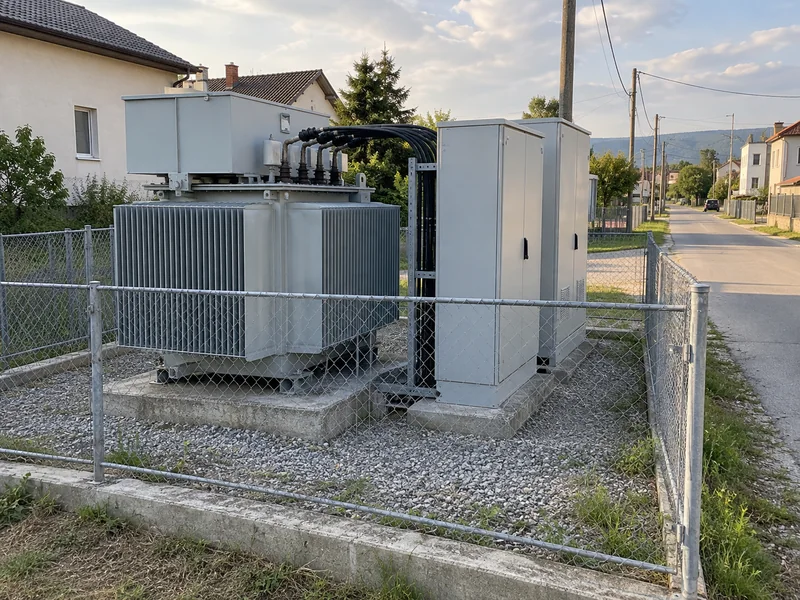
Utility Distribution Oil Immersed Transformer 11kV / 33kV Network Low Loss Design Sealed Tank Option Routine & Type Test Support
Designed for Utility Grid Requirements
Oil Immersed Distribution Transformer Options
11kV and 33kV Distribution Network Support
Low Loss Design for Long-Term Grid Cost
Outdoor Reliability and Sealing Review
Documents for Tender and Utility Approval
View Products
Image Coming Soon
00 / Quick Answer AI-Ready

Page Summary For Buyers & AI Assistants

Utility distribution networks commonly use oil immersed distribution transformers because they are suitable for outdoor operation, long service life, standard grid voltages, and batch deployment across urban and rural networks. Hermetically sealed, conservator type, pole-mounted, pad-mounted, and ground-mounted designs may be used depending on utility standards. Selection should consider losses, impedance, temperature rise, insulation level, short-circuit withstand, sealing reliability, corrosion protection, routine tests, type tests, compliance documents, batch consistency, and local grid specifications.

01 / Industry Demand

Why This Industry Needs Transformers

Utility distribution networks require transformers to step down medium-voltage grid power to usable low-voltage levels for residential, commercial, rural, industrial, and public infrastructure loads. Unlike a single industrial or building project, a utility transformer program may involve hundreds or thousands of units operating across different environments for many years.

For power companies and grid contractors, transformer reliability directly affects network performance. A transformer failure may cause customer outages, complaints, repair costs, regulatory pressure, and loss of confidence in the distribution system. Therefore, utility procurement focuses heavily on technical compliance, test records, consistency, loss performance, and long-term quality control.

Utility distribution transformers often operate outdoors under rain, heat, humidity, dust, pollution, voltage fluctuation, load variation, and occasional short-circuit stress. The transformer must be designed and tested according to the applicable utility standard, not only selected from a general catalog.

Supplying Public Distribution Loads

Utility distribution transformers step down medium-voltage network power to low-voltage supply for homes, buildings, small industries, street lighting, public services, and local infrastructure. They are a core part of the distribution grid.

Supporting Long-Term Batch Operation

Power companies often purchase transformers in batches. They require consistent electrical performance, dimensions, losses, temperature rise, impedance, accessories, and test results across many units.

Reducing Grid Operating Losses

Distribution transformers remain energized for long periods. No-load loss and load loss affect utility operating cost across the whole network. Low-loss designs can significantly influence lifetime cost when deployed at scale.

Withstanding Outdoor Grid Conditions

Utility transformers often operate outdoors in rain, humidity, heat, dust, pollution, coastal air, or remote locations. Tank sealing, coating, bushings, terminals, oil quality, and corrosion protection are important for long-term reliability.

Meeting Utility Standards and Regulatory Review

Utilities may require compliance with IEC, IEEE, national grid standards, local tender specifications, type tests, routine tests, efficiency requirements, and documented quality traceability.

02 / Power Architecture

Typical Power Flow Structure

A typical utility distribution network includes primary medium-voltage feeders, distribution transformers, low-voltage distribution lines, service connections, metering systems, protection devices, and downstream customers. Transformers may be installed on poles, ground-mounted platforms, pad-mounted enclosures, kiosk substations, or distribution substations.

Depending on the network design, transformers may step down 11kV, 22kV, 33kV, or other medium-voltage levels to 400V, 415V, 480V, or local low-voltage standards. The transformer must coordinate with fuses, reclosers, switchgear, surge arresters, grounding systems, and low-voltage protection.

01

Primary Distribution Feeder

Medium-voltage feeders distribute power from substations to local distribution areas, communities, industrial zones, or rural networks.

02

Protection and Switching Equipment

Fuses, switches, reclosers, ring main units, or sectionalizers protect and control the feeder before connection to distribution transformers.

03

Distribution Transformer

The transformer steps down medium voltage such as 11kV or 33kV to low voltage suitable for local consumers and network loads.

04

Low-Voltage Distribution Network

Low-voltage cables or overhead lines distribute power from the transformer to residential, commercial, industrial, or public service customers.

05

Service Connections and Metering

Power is delivered to end users through service cables, metering systems, local protection devices, and customer distribution boards.

06

Monitoring and Maintenance System

Utilities may inspect transformer loading, oil condition, temperature, leakage, bushings, grounding, and physical condition during routine maintenance.

07

Grid Expansion or Replacement Program

Transformers may be added or replaced as load demand grows, old units are retired, or grid efficiency programs are implemented.

Engineering Notes

In utility distribution networks, transformers are often deployed in large numbers and must be consistent with the utility's standard design. The transformer must match feeder voltage, low-voltage system, vector group, impedance, tapping range, insulation level, loss limits, environmental conditions, and protection philosophy.

Oil immersed transformers are the main choice for most outdoor utility distribution applications. Dry type transformers may be used in special indoor urban substations, commercial building utility rooms, tunnels, or safety-sensitive areas where oil-free installation is required.

03 / Selection Logic

Oil Immersed vs Dry Type

Transformer selection for utility networks should be based on the utility specification, not only voltage and capacity. The correct design depends on grid voltage, load profile, installation type, ambient conditions, loss requirements, insulation level, impedance, short-circuit withstand, cooling method, tank design, oil preservation system, corrosion protection, accessories, testing scope, and batch consistency requirements.

Oil immersed distribution transformers are typically preferred for outdoor utility networks because they are practical for long-term field operation and batch deployment. Dry type transformers may be selected only for specific indoor or fire-sensitive utility applications.

Oil Immersed

When It Fits

Oil immersed distribution transformers are highly suitable for utility distribution networks, including pole-mounted transformers, ground-mounted transformers, pad-mounted transformers, kiosk substations, and local distribution substations. They can be designed for common grid voltages such as 11kV, 22kV, 33kV, and project-specific systems.

Utilities may select hermetically sealed oil immersed transformers for reduced oil contact with air and lower routine oil preservation maintenance. Conservator type transformers may be used where the utility standard requires an oil conservator, breather, oil level indication, and traditional oil expansion arrangement.

Oil immersed transformers for utility networks should be reviewed for no-load loss, load loss, temperature rise, impedance, insulation level, short-circuit withstand, tank sealing, bushing arrangement, tap changer type, oil quality, coating system, and routine test results.

Dry Type

When It Fits

Dry type transformers are not the main choice for most outdoor utility distribution networks, but they can be suitable for specific applications such as indoor urban substations, commercial building utility rooms, underground electrical rooms, tunnels, public facilities, or safety-sensitive areas where oil-free installation is required.

Dry type transformers can be supplied with enclosures, temperature controllers, PT100 sensors, cooling fans, alarm contacts, trip contacts, and low-noise design options. These features are useful when the transformer is installed inside a building or enclosed utility room.

For utility use, dry type transformer selection should still consider ventilation, ambient temperature, dust, humidity, partial discharge requirements, sound level, enclosure protection, and maintenance access. Final approval should follow the local utility standard and installation rules.

Comparison between oil immersed and dry type transformers for Transformers for Utility Distribution Networks
Factor Oil Immersed Dry Type Recommendation
Typical Utility Network Use Main choice for outdoor distribution networks, pole-mounted, pad-mounted, and ground-mounted units Used for special indoor or safety-sensitive utility rooms Use oil immersed for most outdoor grid distribution applications
Batch Procurement Suitable for large-volume utility procurement and standardized design Usually used in smaller quantities for special locations Define standard design, loss limits, dimensions, and testing requirements clearly
Loss Performance Low-loss oil immersed designs are widely used for grid efficiency programs Low-loss dry type designs are possible for indoor applications Compare no-load loss and load loss across lifecycle operation
Outdoor Operation Suitable with proper tank sealing, bushings, coating, and accessories Requires protected indoor or enclosed installation Use oil immersed for outdoor grid exposure
Fire Safety Requires oil containment or separation depending on location No insulating oil, useful for indoor fire-sensitive areas Use dry type where oil-free indoor installation is required
Maintenance Requires inspection of oil, leakage, bushings, tank condition, and accessories Lower oil-related maintenance but requires ventilation and cleaning Select based on utility maintenance strategy
Standards Compliance Must meet utility, IEC, IEEE, or national standards Also must meet applicable utility and dry type transformer standards Confirm standard and test scope before quotation
Quality Traceability Batch serial number, test report, material records, and inspection records are important Same traceability required for special projects Require complete traceability for utility procurement

Selection Summary

For utility distribution networks, oil immersed distribution transformers are usually the preferred and most widely used solution. They are suitable for outdoor installation, long-term operation, batch procurement, standard grid voltages, and large-scale deployment across urban, rural, and industrial distribution networks.

Dry type transformers are suitable for limited special applications such as indoor substations, underground utility rooms, tunnels, or fire-sensitive locations. Final selection should be confirmed according to utility standards, voltage level, capacity, losses, impedance, insulation level, short-circuit withstand, environmental conditions, testing requirements, documentation, and long-term maintenance strategy.

04 / Customer Pain Points

What Buyers Worry About

Utility customers are not only purchasing individual transformers. They are managing long-term grid reliability across many installed units. Their biggest concerns include failure rate, outage impact, batch consistency, loss performance, test compliance, outdoor durability, quality traceability, and whether low-cost products will create large-scale operational problems after deployment.

Long-Term Batch Reliability

The Worry

The utility worries that transformers may pass initial inspection but fail after years of large-scale field operation.

How We Address It

We support specification-based design, routine testing, type test references, quality control records, and traceability for each transformer batch.

Outage, Complaint, and Regulatory Pressure

The Worry

Transformer failure can cause customer outages, complaints, repair costs, compensation issues, and regulatory pressure.

How We Address It

We review temperature rise, insulation level, short-circuit withstand, sealing reliability, oil quality, bushings, protection coordination, and test requirements.

Inconsistent Batch Performance

The Worry

In batch procurement, inconsistent losses, impedance, temperature rise, dimensions, or accessories can create acceptance and maintenance problems.

How We Address It

We confirm technical parameters, tolerance limits, drawings, inspection criteria, routine test reports, and quality control procedures before production.

High Network Losses Over Time

The Worry

Transformers operate continuously across the grid, so higher losses increase long-term energy cost at network scale.

How We Address It

We provide no-load loss, load loss, efficiency data, and low-loss transformer design options for lifecycle evaluation.

Outdoor Sealing and Corrosion Risk

The Worry

Rain, humidity, heat, coastal air, dust, and pollution may cause corrosion, oil leakage, bushing issues, or moisture ingress.

How We Address It

We review tank sealing, oil preservation design, coating system, bushing arrangement, gasket quality, terminal protection, and outdoor accessories.

Missing Compliance and Test Documents

The Worry

Utility tenders often require routine test reports, type test reports, compliance sheets, deviation lists, drawings, and technical declarations.

How We Address It

We prepare technical documents, compliance responses, deviation lists, test reports, drawings, manuals, and inspection records according to tender requirements.

Concern About Low-Cost Products in Large-Scale Operation

The Worry

Low initial price may hide higher losses, weak sealing, poor materials, inconsistent production, or insufficient testing.

How We Address It

We support technical comparison based on loss data, temperature rise, short-circuit withstand, material specification, test scope, and lifecycle cost.

05 / Common Mistakes

Selection Mistakes to Avoid

Utility transformer procurement can fail when buyers compare only unit price and rated capacity. Distribution networks require consistent performance, low losses, tested reliability, outdoor durability, and complete compliance documentation across large numbers of transformers.

⚠ Comparing Only Purchase Price

Why It's a Problem

A lower purchase price may come with higher losses, weaker sealing, lower material quality, or inconsistent test performance.

Better Recommendation

Compare no-load loss, load loss, temperature rise, short-circuit withstand, oil quality, sealing design, tests, and lifecycle cost.

⚠ Not Defining Loss Tolerances Clearly

Why It's a Problem

Utilities may face batch acceptance disputes if no-load loss and load loss tolerances are unclear.

Better Recommendation

Define guaranteed loss values, accepted tolerance method, testing standard, and reporting format in the tender or specification.

⚠ Ignoring Short-Circuit Withstand Requirements

Why It's a Problem

Distribution networks may experience faults, and transformers must withstand mechanical and thermal stress within specified limits.

Better Recommendation

Confirm short-circuit withstand requirements, type test references, impedance, and protection coordination according to utility standards.

⚠ Selecting Tank Design Without Maintenance Strategy

Why It's a Problem

Hermetically sealed and conservator type transformers have different oil preservation arrangements and maintenance practices.

Better Recommendation

Select sealed or conservator type design according to utility maintenance standards, climate, inspection practice, and tender requirements.

⚠ Underestimating Outdoor Environmental Exposure

Why It's a Problem

Rain, moisture, salt spray, UV, heat, dust, and pollution can reduce transformer life if tank coating, sealing, and bushings are not suitable.

Better Recommendation

Specify site environment, corrosion category, coating requirements, outdoor protection, bushing type, and terminal arrangement clearly.

⚠ Treating All 11kV or 33kV Transformers as Standard

Why It's a Problem

Different utilities may require different insulation levels, tapping ranges, vector groups, losses, accessories, and nameplate information.

Better Recommendation

Provide the utility specification and confirm all electrical and mechanical details before production.

⚠ Not Requiring Complete Traceability

Why It's a Problem

In large batch procurement, lack of serial number control, test records, and production traceability makes future maintenance and claim handling difficult.

Better Recommendation

Require transformer serial number, routine test report, material records where applicable, inspection records, and final document package for each batch.

06 / Stakeholder View

What Each Stakeholder Cares About

Utility transformer procurement involves technical, commercial, operational, and regulatory stakeholders. Grid engineers focus on compliance and performance, procurement teams focus on tender evaluation, operation teams focus on field reliability, and regulators or owners focus on network losses and service continuity.

Utility Company / Grid Operator

Main Concerns

Network reliability, outage reduction, technical compliance, transformer losses, long-term operation, and regulatory performance.

What They Need From Supplier

Transformers that meet utility specifications, provide consistent test results, and support stable long-term operation across the distribution network.

Utility Procurement Team

Main Concerns

Tender compliance, batch pricing, technical comparison, document completeness, delivery schedule, inspection plan, and supplier qualification.

What They Need From Supplier

A clear technical and commercial proposal, compliance sheet, deviation list, drawings, test documents, delivery plan, and quality control information.

Distribution Network Engineer

Main Concerns

Voltage ratio, capacity, impedance, losses, insulation level, tapping range, vector group, short-circuit withstand, and protection coordination.

What They Need From Supplier

Complete technical datasheets, type test references, routine test reports, standard references, and confirmed electrical parameters.

Operation & Maintenance Team

Main Concerns

Field inspection, oil leakage, corrosion, bushing condition, load growth, spare parts, failure tracking, and maintenance access.

What They Need From Supplier

Maintenance manuals, serial number traceability, inspection records, accessory details, spare parts guidance, and reliable outdoor design.

EPC Contractor / Grid Contractor

Main Concerns

Installation interface, foundation or pole mounting, cable connection, delivery coordination, packing, site acceptance, and document handover.

What They Need From Supplier

Accurate drawings, dimensions, weight, terminal arrangement, mounting details, packing list, test reports, and installation guidance.

Regulator / Owner's Representative

Main Concerns

Efficiency, grid losses, service continuity, compliance with standards, quality assurance, and long-term asset performance.

What They Need From Supplier

Clear loss data, standards compliance, type test evidence, quality control records, and transparent technical documentation.

07 / Recommended Configuration

Typical Transformer Configurations

The following configurations are general references for utility distribution transformer applications. Final selection should be confirmed according to local utility standards, tender specification, voltage level, capacity, loss requirements, installation method, environmental conditions, testing scope, and grid operation practice.

Standard outdoor utility distribution network

Oil immersed distribution transformer

VoltageCommon systems such as 11kV/0.4kV, 22kV/0.4kV, 33kV/0.4kV, or project-specific voltage
CapacityCommonly from 25 kVA to 2500 kVA depending on network design
CoolingONAN
Key OptionsOff-circuit tap changer, outdoor bushings, oil level indicator if required, pressure relief device, drain valve, thermometer pocket, galvanized or painted tank
NotesSuitable for standard utility feeders, rural networks, urban distribution, and public low-voltage supply.

Low-maintenance outdoor grid deployment

Hermetically sealed oil immersed transformer

Voltage11kV, 22kV, 33kV, or project-specific MV/LV distribution voltage
CapacityCommon distribution ratings according to utility standard
CoolingONAN
Key OptionsFully sealed tank, corrugated tank or sealed expansion design, low-loss core option, outdoor coating, pressure relief device, sealed bushings
NotesSuitable where reduced oil contact with air and lower routine oil preservation maintenance are preferred.

Utility standard requiring conservator design

Conservator type oil immersed distribution transformer

VoltageCommon MV/LV distribution levels such as 11kV/0.4kV or 33kV/0.4kV
CapacityAccording to utility tender specification
CoolingONAN
Key OptionsConservator tank, oil level indicator, silica gel breather, Buchholz relay if applicable, pressure relief device, oil temperature indicator
NotesSuitable where utility standards require traditional oil expansion and visible oil level monitoring.

Grid efficiency improvement or low-loss tender program

Low loss oil immersed distribution transformer

VoltageProject-specific utility voltage, commonly 11kV or 33kV primary voltage
CapacityAccording to network load and tender requirements
CoolingONAN
Key OptionsLow-loss core material, optimized winding design, specified loss tolerance, routine loss test report, efficiency data, lifecycle loss evaluation support
NotesSuitable for utilities focusing on reducing long-term distribution network losses and operating cost.

Indoor urban utility room, tunnel, or fire-sensitive public area

Cast resin dry type transformer with enclosure

VoltageProject-specific MV/LV voltage ratio
CapacityCommonly from 250 kVA to 3150 kVA depending on installation design
CoolingAN or AF
Key OptionsIP enclosure, temperature controller, PT100 sensors, cooling fans, alarm contacts, trip contacts, low-noise option
NotesSuitable for special indoor locations where oil-free transformer installation is required by utility or building safety rules.

Configuration Notes

The above configurations are preliminary references only. Final transformer type, rated capacity, voltage ratio, vector group, impedance, insulation level, tapping range, cooling method, loss level, tank structure, sealing method, coating system, accessories, short-circuit withstand, test scope, and document package should be confirmed according to utility specifications, tender documents, local standards, site environment, and grid operation requirements.

08 / Documents & Approval

Documentation Required

For utility distribution transformer procurement, documents are essential for tender evaluation, factory inspection, batch acceptance, grid approval, warehouse receiving, field installation, quality tracking, and long-term maintenance. Complete documentation helps utilities control technical compliance and traceability across many transformer units.

Required Documents

Technical Datasheet

Includes rated capacity, voltage ratio, frequency, vector group, impedance, insulation level, tapping range, cooling method, temperature rise, losses, tank design, accessories, and applicable standards.

General Arrangement Drawing

Shows transformer dimensions, weight, lifting lugs, tank structure, bushing arrangement, tap changer position, accessories, grounding points, and installation interface.

Nameplate Drawing

Confirms rated electrical parameters, voltage ratio, connection symbol, impedance, cooling method, oil weight, total weight, standard reference, and serial number format.

Compliance Sheet

Responds to utility specification clauses, efficiency requirements, standards, accessories, test scope, materials, and documentation requirements.

Deviation List

Clearly states any differences from the tender or utility specification for technical review and approval.

Routine Test Report

Records test results for each transformer, including winding resistance, voltage ratio, vector group, impedance, load loss, no-load loss, insulation resistance, applied voltage test, and induced voltage test.

Type Test Report or Type Test Reference

Provides evidence for temperature rise, lightning impulse, short-circuit withstand, sound level, or other required type tests according to utility tender requirements.

Short-Circuit Withstand Test Reference

Supports review of transformer ability to withstand network fault conditions when required by the utility specification.

Loss Data Sheet

Provides no-load loss, load loss, tolerance, efficiency data, and comparison against tender loss requirements.

Oil Test Report

Provides transformer oil test data such as breakdown voltage and relevant oil quality indicators according to agreed requirements.

Material and Quality Traceability Records

Provides batch records, serial number tracking, inspection records, and quality control information where required by the utility.

Coating and Corrosion Protection Information

Describes paint system, coating thickness, surface treatment, galvanizing if applicable, and corrosion protection measures.

Installation and Maintenance Manual

Provides guidance for transport, storage, lifting, installation, oil inspection, energization, field inspection, maintenance, and safety precautions.

Factory Acceptance Test Procedure

Defines routine test items, witness points, sampling inspection plan if applicable, acceptance criteria, and reporting format.

Packing List and Batch Delivery Documents

Identifies transformer quantities, serial numbers, accessories, spare parts, manuals, test reports, packing method, shipping marks, and delivery batches.

Inspection Requirements

Routine Test for Each Unit

Each transformer should be routine tested according to the agreed standard and utility specification. Typical tests include winding resistance, voltage ratio, vector group, impedance, load loss, no-load loss, insulation resistance, applied voltage test, and induced voltage test.

Loss Measurement and Tolerance Check

No-load loss and load loss should be measured and compared against tender requirements and accepted tolerance rules because losses are critical for utility lifecycle cost.

Visual and Dimensional Inspection

The transformer should be checked against approved drawings, including dimensions, tank, bushings, accessories, tap changer, paint finish, lifting lugs, nameplate, grounding points, and installation interface.

Oil, Sealing, and Leakage Check

Oil quality, tank sealing, gasket areas, valves, bushings, and welded seams should be checked according to quality control and inspection requirements.

Batch Acceptance and Traceability Review

For utility procurement, serial numbers, routine test reports, inspection records, packing lists, and batch delivery documents should be reviewed to support long-term traceability.

Approval Notes

For an accurate utility distribution transformer proposal, customers are encouraged to provide the tender specification, utility standard, voltage ratio, rated capacity list, frequency, vector group, impedance requirement, tapping range, insulation level, loss limits, temperature rise limits, short-circuit withstand requirements, installation method, environmental conditions, tank type, accessory list, coating requirements, routine and type test requirements, compliance sheet format, delivery batch plan, and required traceability documents.

09 / Recommended Products

Transformers For This Application

The following transformer products are commonly recommended for utility distribution network procurement. Final product configuration should be confirmed against tender specifications, utility standards, and consultant approval.

Image Coming Soon

Oil Immersed Distribution Transformer for Utility Networks

Suitable for public distribution grids, rural electrification, urban feeders, industrial distribution networks, and utility batch procurement programs.

  • Suitable for outdoor grid operation
  • 11kV, 22kV, 33kV options
  • ONAN cooling
  • Custom loss requirements available
  • Routine test report for each unit
Image Coming Soon

Hermetically Sealed Oil Immersed Transformer

Suitable for utilities requiring sealed tank design, reduced oil contact with air, and lower routine oil preservation maintenance.

  • Fully sealed tank design
  • Outdoor operation suitable
  • Low-loss option available
  • Pressure relief device available
  • Reduced oil preservation maintenance
Image Coming Soon

Conservator Type Distribution Transformer

Suitable for utility standards requiring conservator tank design, oil level indication, breather, and traditional oil expansion arrangement.

  • Conservator tank configuration
  • Oil level indicator available
  • Breather option available
  • Outdoor bushing arrangement
  • Utility standard customization
Image Coming Soon

Low Loss Distribution Transformer

Designed for utility grid efficiency programs where transformer losses, lifecycle cost, and long-term operation are important procurement factors.

  • Reduced no-load loss available
  • Reduced load loss available
  • Loss data sheet support
  • Suitable for batch procurement
  • Lifecycle cost evaluation support
Image Coming Soon

11kV and 33kV Distribution Transformer

Suitable for common utility distribution networks requiring medium-voltage step-down transformers with project-specific parameters.

  • 11kV and 33kV primary voltage options
  • Custom tapping range
  • Utility-specific vector group
  • Outdoor tank design
  • Compliance document support
11 / Resources

Related Guides & Knowledge

Background reading to help utility companies, grid contractors, distributors, and consultants prepare a clearer transformer specification for distribution network procurement.

12 / FAQ

Frequently Asked Questions

The following FAQs answer common questions from utility companies, grid contractors, consultants, and procurement teams when sourcing distribution transformers for grid networks.

01 What type of transformer is commonly used in utility distribution networks?

Oil immersed distribution transformers are commonly used in utility distribution networks because they are suitable for outdoor operation, standard grid voltages, long-term service, and large-scale deployment. They may be pole-mounted, ground-mounted, pad-mounted, hermetically sealed, or conservator type depending on utility standards. Dry type transformers are less common for outdoor distribution networks but may be used in indoor urban substations, tunnels, or fire-sensitive areas. The final choice should follow local utility specifications, grid standards, loss limits, and installation requirements.

02 What is the difference between hermetically sealed and conservator type distribution transformers?

A hermetically sealed transformer is designed to reduce or prevent contact between transformer oil and outside air, which can help reduce oil oxidation and routine oil preservation maintenance. A conservator type transformer uses an external oil conservator tank to accommodate oil expansion and usually includes an oil level indicator and breather. Some utilities prefer sealed designs for lower maintenance, while others specify conservator type transformers based on existing standards and maintenance practice. The correct choice should follow the utility tender specification.

03 Why are low loss transformers important for utility companies?

Low loss transformers are important because distribution transformers remain energized for many years across the grid. No-load losses occur whenever the transformer is energized, and load losses occur during power delivery. When a utility operates hundreds or thousands of transformers, even small differences in losses can significantly affect long-term network operating cost. This is why many utilities specify maximum no-load loss, load loss, efficiency requirements, and loss tolerance in their tender documents.

04 What should be considered when selecting an 11kV or 33kV distribution transformer?

An 11kV or 33kV distribution transformer should be selected according to the utility specification, voltage ratio, rated capacity, frequency, vector group, impedance, tapping range, insulation level, temperature rise, losses, short-circuit withstand, tank type, accessories, installation method, and environmental conditions. Outdoor operation also requires attention to tank sealing, bushings, coating, rain protection, humidity, corrosion, and maintenance access. Routine test reports and type test references may be required for tender or utility approval.

05 What tests are required for utility distribution transformers?

Utility distribution transformers usually require routine tests for each unit, including winding resistance, voltage ratio, vector group verification, impedance voltage, load loss, no-load loss, insulation resistance, applied voltage test, and induced voltage test. Depending on the utility specification, type test reports or references may also be required for temperature rise, lightning impulse, short-circuit withstand, sound level, or other performance items. Loss measurement is especially important because utilities often evaluate transformers based on long-term grid operating cost.

06 Why is short-circuit withstand important for distribution transformers?

Distribution transformers may experience fault currents during network faults, downstream short circuits, switching events, or protection coordination failures. Short-circuit withstand capability helps confirm that the transformer can tolerate specified mechanical and thermal stresses for the required duration. Utilities may request short-circuit withstand test references, impedance values, and design confirmation according to applicable standards. This is especially important in large-scale grid procurement because failures under fault conditions can cause outages and costly field replacements.

07 What documents are required for utility transformer tenders?

Common utility tender documents include the technical datasheet, general arrangement drawing, nameplate drawing, compliance sheet, deviation list, routine test report, type test report or reference, loss data sheet, oil test report, coating information, installation manual, maintenance manual, FAT procedure, quality control plan, and batch delivery documents. For batch procurement, utilities may also require serial number traceability, inspection records, packing lists, and material or production quality records. The exact document list should be confirmed from the tender specification.

08 What information is needed to quote a utility distribution transformer?

To prepare an accurate quotation, provide the utility specification, voltage ratio, rated capacity list, frequency, vector group, impedance requirement, tapping range, insulation level, loss limits, temperature rise limits, short-circuit withstand requirements, installation method, tank type, accessory list, coating requirements, environmental conditions, applicable standards, routine and type test requirements, compliance sheet format, delivery quantity, batch plan, and required documents. Clear tender information helps avoid technical deviations and approval delays.

Share
Share on X Share on LinkedIn Share on WhatsApp Share via Email
Ask AI
Link copied ✓
Get Started

Ready For Your Transformers for Utility Distribution Networks Project?

Send your voltage, capacity, cooling preference, and destination country. Our engineers reply with FOB / CIF pricing, lead time, and recommended configuration within 24 hours.

View All Applications