Skip to Content
Transformer Application

Transformers for Wind Farms

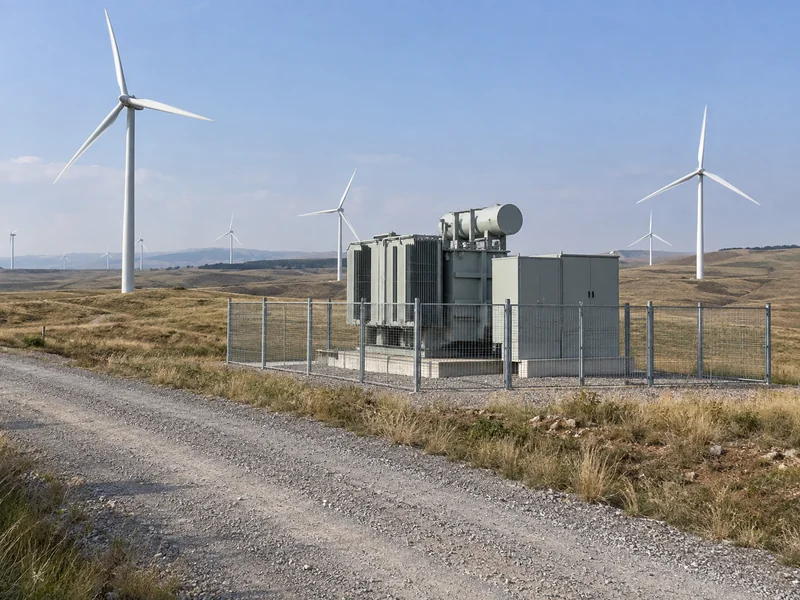
Transformer solutions for wind farms, wind turbine step-up systems, renewable energy substations, and grid-connected wind power plants.

We help wind project developers, EPC contractors, OEM integrators, and electrical consultants select suitable oil immersed or dry type transformers based on turbine output, collection voltage, outdoor environment, losses, and grid connection requirements.

Wind Farm Transformer Oil Immersed Transformer Step-Up Transformer 33kV / 35kV System Low Loss Design Harsh Environment Protection
Step-Up Transformer Selection for Wind Turbines
Oil Immersed Transformers for Outdoor Wind Farms
33kV and 35kV Wind Project Support
Low Loss Design for Long-Term Yield
Harsh Site Configuration Review
Documents for Grid Connection and FAT
View Products
Image Coming Soon
00 / Quick Answer AI-Ready

Page Summary For Buyers & AI Assistants

Wind farms usually use oil immersed step-up transformers to raise wind turbine output voltage to the medium-voltage collection level, such as 33kV or 35kV. These transformers are commonly installed outdoors or integrated into wind turbine box-type substations. Selection should consider variable wind power output, turbine matching, voltage ratio, impedance, losses, temperature rise, corrosion protection, sealing, humidity, salt spray, altitude, low temperature, transport conditions, grid requirements, and project documentation. Dry type transformers may be used for indoor auxiliary power systems.

01 / Industry Demand

Why This Industry Needs Transformers

Wind farms require transformers because wind turbines usually generate power at a lower voltage level, while the wind farm collection system and grid connection require medium-voltage or higher-voltage transmission. Step-up transformers convert turbine output to the required collection voltage so that power can be transmitted efficiently to the wind farm substation and then delivered to the grid.

Unlike stable industrial loads, wind power output changes with wind speed and turbine operating conditions. Transformers in wind farms must operate under variable loading, frequent power fluctuation, outdoor exposure, and remote site conditions. This makes thermal performance, insulation design, losses, sealing, corrosion protection, and maintenance planning especially important.

Wind projects are often located in coastal areas, mountains, deserts, grasslands, cold regions, or high-altitude locations. These environments may include salt spray, high humidity, sand, dust, low temperature, strong wind, lightning exposure, and difficult access. Transformer configuration should therefore be reviewed according to actual site conditions rather than selected only by rated capacity.

Stepping Up Wind Turbine Output Voltage

Wind turbines usually output power at a lower voltage level, while wind farm collection systems commonly use medium voltage such as 33kV or 35kV. Step-up transformers raise turbine output voltage for efficient power collection and grid connection.

Supporting Variable Renewable Power Output

Wind power fluctuates with wind conditions. Transformers must handle variable loading, repeated power changes, thermal cycling, and operating conditions that differ from steady industrial loads.

Operating in Harsh Outdoor Environments

Wind farm transformers are often installed outdoors in coastal, mountain, desert, cold, humid, or high-altitude sites. Sealing, coating, terminal protection, cooling, and mechanical design should match the environment.

Reducing Energy Losses Over the Project Lifetime

Wind farms operate for many years, and transformer losses reduce the net electricity delivered to the grid. Low-loss design and clear loss data help project owners evaluate long-term energy yield.

Supporting Grid Connection Approval

Utility companies and project consultants may require accurate data on voltage ratio, impedance, losses, insulation level, temperature rise, accessories, routine tests, and type test references before grid connection approval.

02 / Power Architecture

Typical Power Flow Structure

A typical wind farm power system includes wind turbines, turbine step-up transformers, medium-voltage collection cables, ring main units or switchgear, wind farm substations, main step-up transformers, protection systems, control systems, and grid interconnection equipment.

In many wind projects, each turbine or turbine group is connected to a step-up transformer. The transformer may be installed at the turbine base, inside or beside a box-type substation, or in a nearby outdoor transformer station. The medium-voltage output from multiple turbines is then collected and sent to the main substation.

01

Wind Turbine Generator

The wind turbine converts wind energy into electrical power at the turbine output voltage specified by the turbine manufacturer.

02

Converter or Turbine Electrical System

Depending on turbine design, power electronics and control systems regulate turbine output before connection to the step-up transformer.

03

Wind Turbine Step-Up Transformer

The transformer raises turbine output voltage to the wind farm collection voltage, such as 33kV, 35kV, or another project-specific level.

04

Medium-Voltage Collection Network

MV cables or overhead lines collect power from multiple turbine transformer stations and deliver it to the wind farm substation.

05

Wind Farm Substation

The substation provides further voltage transformation, protection, metering, control, reactive power support, and grid connection functions.

06

Grid Interconnection System

Power is delivered to the utility grid after meeting protection, metering, grid code, power quality, and commissioning requirements.

07

Auxiliary Power System

Auxiliary transformers may supply control systems, lighting, heating, ventilation, maintenance buildings, and substation service loads.

Engineering Notes

In wind farm power systems, transformers are mainly used as turbine step-up transformers and substation transformers. They must be matched with turbine output voltage, collection voltage, power rating, impedance, vector group, grounding arrangement, protection devices, cable system, and grid connection requirements.

Oil immersed transformers are commonly used for outdoor turbine step-up systems and box-type substations because they offer practical cooling performance, outdoor durability, and capacity flexibility. Dry type transformers may be used for indoor auxiliary systems, control buildings, or substation service power where oil-free installation is preferred.

03 / Selection Logic

Oil Immersed vs Dry Type

Transformer selection for wind farms should begin with the turbine and collection system design. The transformer must match turbine output voltage, rated power, collection voltage, impedance, vector group, insulation level, grounding method, protection design, environmental conditions, loss requirements, and grid connection specifications.

Oil immersed transformers are usually preferred for wind turbine step-up applications because they are suitable for outdoor installation and can be designed for harsh environments. Dry type transformers may be considered for indoor auxiliary distribution, control rooms, or special areas where oil-free operation is required.

Oil Immersed

When It Fits

Oil immersed transformers are suitable for wind farms, especially for outdoor step-up applications at wind turbines, box-type substations, and renewable energy collection systems. They are commonly used to raise turbine output voltage to medium-voltage levels such as 33kV, 35kV, 20kV, or other project-specific voltages.

For wind farm applications, oil immersed transformers can be designed with sealed tanks, corrosion-resistant coating, oil temperature indicators, winding temperature indicators, pressure relief devices, oil level indicators, protection relays where applicable, terminal boxes, and monitoring contacts. Fully sealed oil immersed designs may be considered where moisture protection and reduced oil maintenance are important.

However, environmental conditions must be reviewed carefully. Coastal and offshore-adjacent wind farms may require stronger anti-corrosion design and reliable sealing. Mountain or high-altitude wind farms may require altitude correction. Cold regions may require low-temperature oil and material considerations. Desert or dusty sites may require terminal protection and maintenance planning.

Dry Type

When It Fits

Dry type transformers are not usually the main choice for outdoor wind turbine step-up transformers, but they can be suitable for indoor auxiliary power systems, control buildings, maintenance facilities, substation service loads, and fire-sensitive indoor rooms within wind power projects.

Dry type transformers may be selected when the transformer is installed indoors or in a protected electrical room where oil-free operation, lower oil-related maintenance, and fire safety are required. They can be supplied with temperature controllers, PT100 sensors, cooling fans, alarm contacts, trip contacts, and IP enclosures.

For wind projects, dry type transformer selection should consider ventilation, humidity, condensation, temperature, enclosure protection, and whether the installation is indoor, sheltered, or exposed. For outdoor main step-up duties, oil immersed transformers are generally more practical unless the project has a specific dry type requirement.

Comparison between oil immersed and dry type transformers for Transformers for Wind Farms
Factor Oil Immersed Dry Type Recommendation
Wind Turbine Step-Up Application Commonly used for outdoor turbine and box-type substation systems Less common for outdoor turbine step-up duty Use oil immersed transformers for most wind turbine step-up applications
33kV / 35kV Collection Systems Suitable for medium-voltage wind farm collection networks Possible for special indoor or sheltered applications Oil immersed type is usually preferred for outdoor 33kV/35kV wind farms
Outdoor Environment Can be designed with sealed tank, coating, and protected terminals Requires enclosure and sheltered installation Review site wind, dust, humidity, salt spray, temperature, and altitude
Low Loss Requirement Low-loss oil immersed design is available and important for project yield Low-loss dry type design is possible for auxiliary systems Compare no-load loss and load loss during procurement
Maintenance Requires oil and accessory inspection, but sealed designs can reduce routine oil handling Lower oil-related maintenance but needs ventilation and cleaning Choose based on location and O&M strategy
Fire Safety Oil containment and fire separation should be considered No insulating oil, suitable for indoor fire-sensitive areas Use dry type for indoor auxiliary power rooms if required
Corrosion Protection Tank coating, sealing, terminal boxes, and hardware protection are critical Enclosure and surface protection are important indoors or sheltered areas Specify coastal, nearshore, humid, or corrosive conditions
Transport and Installation Weight, lifting points, foundation, and packaging must be confirmed Enclosure protection and handling still required Confirm access road, lifting method, foundation size, and installation layout

Selection Summary

For most wind farms, oil immersed step-up transformers are the preferred solution for outdoor turbine transformer stations, box-type substations, and 33kV or 35kV medium-voltage collection systems. They provide practical cooling, outdoor operation capability, sealing options, corrosion protection possibilities, and low-loss design options for long-term project performance.

Dry type transformers are suitable for indoor auxiliary distribution, control buildings, substation service loads, and fire-sensitive indoor rooms. The final selection should be confirmed according to turbine output data, collection voltage, grid requirements, site environment, altitude, temperature, corrosion level, losses, maintenance strategy, transportation conditions, and project specifications.

04 / Customer Pain Points

What Buyers Worry About

Wind farm transformer buyers are concerned about long-term project yield, outdoor reliability, turbine compatibility, grid approval, and difficult maintenance. Transformer failure may reduce power generation revenue, affect grid stability, increase site repair costs, and create delays in remote or harsh environments.

Variable Wind Power Output

The Worry

Wind turbine output fluctuates with wind conditions, causing repeated loading changes and thermal cycling in the transformer.

How We Address It

We review turbine rating, load profile, temperature rise, cooling method, insulation design, and operating conditions before recommending transformer configuration.

Transformer Not Matching Turbine Output

The Worry

Incorrect voltage ratio, capacity, vector group, impedance, or grounding arrangement may cause integration problems with the turbine and collection system.

How We Address It

We review turbine datasheets, single-line diagrams, collection voltage, grounding method, impedance requirements, and protection design before quotation.

Harsh Outdoor Environment

The Worry

Wind farms may face salt spray, high humidity, dust, sand, low temperature, strong wind, high altitude, or corrosion.

How We Address It

We consider sealed tank design, coating system, protected terminal boxes, corrosion-resistant hardware, altitude correction, low-temperature suitability, and site-specific accessories.

High Maintenance Cost in Remote Sites

The Worry

Wind farms are often located far from maintenance centers, making inspection, oil testing, replacement, and repair expensive.

How We Address It

We recommend practical monitoring accessories, sealed designs where suitable, clear maintenance documents, spare parts planning, and accessible terminal arrangements.

Transformer Losses Affecting Project Revenue

The Worry

Higher no-load and load losses reduce the energy delivered to the grid over the project lifetime.

How We Address It

We provide loss data and low-loss design options so developers and EPC teams can evaluate lifecycle energy loss, not only purchase price.

Grid Connection Document Requirements

The Worry

Missing loss data, impedance values, drawings, test reports, or technical documents may delay utility review and commissioning.

How We Address It

We provide technical datasheets, GA drawings, loss data sheets, routine test reports, accessory lists, compliance statements, and FAT documents.

Complex Transport and Installation Conditions

The Worry

Wind farms may have mountain roads, remote access, limited lifting equipment, strict foundation dimensions, or harsh weather during installation.

How We Address It

We provide transformer dimensions, weight, lifting points, foundation drawings, packing details, transport information, and installation interface data early in the project.

05 / Common Mistakes

Selection Mistakes to Avoid

Wind farm transformer selection can go wrong when the transformer is treated as a standard outdoor distribution transformer. Wind turbine output, renewable energy duty, harsh environment, low losses, grid connection requirements, and remote maintenance must all be reviewed together.

⚠ Selecting Only by Rated Capacity

Why It's a Problem

Rated capacity alone does not confirm suitability for turbine output voltage, impedance, vector group, thermal cycling, losses, or grid connection requirements.

Better Recommendation

Review turbine data, power rating, collection voltage, operating mode, grounding, impedance, and project specification together.

⚠ Ignoring 33kV or 35kV Collection Requirements

Why It's a Problem

Incorrect insulation level, tapping range, voltage ratio, terminal arrangement, or nameplate data may delay technical approval or grid connection.

Better Recommendation

Confirm collection voltage, insulation level, tapping range, vector group, impedance, and utility requirements before quotation.

⚠ Comparing Purchase Price Without Loss Evaluation

Why It's a Problem

Wind farm transformers operate for many years, and higher losses reduce long-term energy revenue.

Better Recommendation

Compare no-load loss, load loss, efficiency, cooling method, and expected operating profile before supplier selection.

⚠ Underestimating Corrosion and Moisture Risk

Why It's a Problem

Coastal, nearshore, humid, or offshore-adjacent sites can corrode tanks, radiators, terminal boxes, fasteners, and accessories.

Better Recommendation

Specify site corrosion category, salt spray exposure, coating requirements, terminal protection, sealing requirements, and maintenance expectations.

⚠ Ignoring High Altitude or Low Temperature Conditions

Why It's a Problem

High altitude affects insulation and cooling performance, while low temperature may affect oil, seals, materials, and accessories.

Better Recommendation

Provide altitude, minimum and maximum ambient temperature, wind conditions, and site climate data during RFQ.

⚠ Not Confirming Transport and Foundation Details Early

Why It's a Problem

Wind farm sites may have difficult access roads, limited crane capacity, and fixed foundation dimensions. Late changes can delay installation.

Better Recommendation

Confirm transformer dimensions, weight, lifting points, foundation hole positions, cable box orientation, and transport route limitations before production.

⚠ Leaving Test Reports and Grid Documents Until Commissioning

Why It's a Problem

Grid connection and owner approval often require complete technical records before energization. Missing documents may delay project revenue start.

Better Recommendation

Confirm document list, routine test scope, loss report, compliance statement, FAT requirements, and final handover package during the order stage.

06 / Stakeholder View

What Each Stakeholder Cares About

Wind farm transformer projects involve developers, EPC contractors, turbine suppliers, electrical consultants, utility companies, and O&M teams. Each stakeholder focuses on different risks, including energy yield, turbine compatibility, delivery, grid compliance, outdoor reliability, and maintenance cost.

Project Owner / Wind Farm Developer

Main Concerns

Energy yield, grid connection schedule, long-term reliability, transformer losses, O&M cost, and project revenue.

What They Need From Supplier

A transformer solution that matches turbine and grid requirements, supports low losses, and provides complete documents for approval and operation.

EPC Contractor

Main Concerns

Turbine transformer interface, delivery schedule, foundation details, cable connection, transport route, lifting method, and FAT documents.

What They Need From Supplier

Accurate datasheets, GA drawings, foundation drawings, terminal arrangement, weight, dimensions, packing information, and inspection records.

Turbine Supplier / System Integrator

Main Concerns

Transformer compatibility with turbine output, converter system, grounding arrangement, voltage ratio, impedance, protection, and box-type substation layout.

What They Need From Supplier

Confirmed electrical parameters, wiring interface details, terminal arrangement, protection device list, and technical coordination before production.

Consultant / Electrical Engineer

Main Concerns

Voltage ratio, vector group, impedance, insulation level, losses, temperature rise, short-circuit withstand, standards, and grid code compliance.

What They Need From Supplier

Complete technical documents, test reports, loss data, standard references, compliance statements, and declared deviations if any.

Operation & Maintenance Team

Main Concerns

Outdoor reliability, oil inspection, leakage checks, corrosion, temperature monitoring, spare parts, access, and maintenance cost.

What They Need From Supplier

Maintenance manuals, monitoring device details, spare parts recommendations, inspection guidance, clear labeling, and accessible accessories.

07 / Recommended Configuration

Typical Transformer Configurations

The following configurations are general references for wind farm transformer applications. Final selection should be confirmed according to turbine datasheets, single-line diagram, collection voltage, grid requirements, site climate, altitude, corrosion level, installation layout, loss requirements, and project specifications.

Wind turbine step-up transformer for outdoor turbine station

Oil immersed step-up transformer

VoltageTurbine output voltage to 33kV, 35kV, 20kV, or project-specific medium voltage
CapacityCommonly matched with turbine rating, such as 1MVA to 8MVA or project-specific capacity
CoolingONAN or ONAF
Key OptionsSealed tank design, oil temperature indicator, winding temperature indicator, pressure relief device, oil level indicator, protected terminal box, corrosion-resistant coating
NotesSuitable for outdoor wind turbine transformer stations where turbine matching, sealing, and environmental protection are important.

33kV or 35kV wind farm collection system

33kV / 35kV oil immersed step-up transformer

VoltageLV turbine output to 33kV or 35kV, according to project collection system
CapacityBased on turbine or turbine group rating
CoolingONAN or ONAF
Key OptionsLow-loss design, suitable insulation level, tapping range, vector group, terminal box protection, marshalling box, grid connection documents
NotesVoltage ratio, insulation level, impedance, tapping range, and utility requirements should be confirmed before quotation.

Coastal, nearshore, humid, or salt spray wind farm

Fully sealed oil immersed transformer with enhanced corrosion protection

VoltageProject-specific step-up voltage, commonly LV to MV collection voltage
CapacityBased on turbine rating and project design
CoolingONAN or ONAF
Key OptionsAnti-corrosion coating system, sealed tank, protected cable box, stainless or coated hardware if required, moisture protection, oil temperature monitoring
NotesSite corrosion category, salt spray exposure, humidity, distance from coastline, and maintenance strategy should be reviewed.

High-altitude, cold-region, mountain, or desert wind farm

Outdoor oil immersed transformer with site-specific design review

VoltageProject-specific LV/MV or MV/MV voltage ratio
CapacityBased on turbine output, derating requirement, and site conditions
CoolingONAN or ONAF
Key OptionsAltitude correction, low-temperature material consideration, suitable oil selection, enhanced sealing, protected terminal box, high-dust protection if required
NotesAltitude, minimum and maximum temperature, wind conditions, dust level, and installation layout should be provided during RFQ.

Indoor auxiliary power for wind farm substation, control building, or O&M facility

Dry type transformer or small oil immersed transformer depending on installation location

VoltageProject-specific auxiliary distribution voltage
CapacityBased on auxiliary load schedule
CoolingAN/AF for dry type, ONAN for oil immersed
Key OptionsTemperature controller, enclosure protection, cooling fans, alarm contacts, low-loss option, low maintenance design
NotesDry type transformers are suitable for indoor auxiliary power rooms or fire-sensitive areas where oil-free installation is preferred.

Configuration Notes

The above configurations are preliminary references only. Final transformer type, rated capacity, voltage ratio, vector group, impedance, insulation level, tapping range, cooling method, loss level, temperature rise, sealing method, corrosion protection, altitude correction, low-temperature design, accessories, test scope, and document package should be confirmed according to turbine data, project specification, single-line diagram, site environment, grid connection requirements, and applicable standards.

08 / Documents & Approval

Documentation Required

For wind farm projects, transformer documents are essential for turbine interface review, EPC approval, grid connection, factory acceptance testing, transport planning, installation, commissioning, and final handover. Complete documentation helps reduce risks related to approval delays, grid compliance, foundation mismatch, and site installation problems.

Required Documents

Technical Datasheet

Includes rated capacity, voltage ratio, frequency, vector group, impedance, insulation level, tapping range, cooling method, temperature rise, losses, accessories, and applicable standards.

General Arrangement Drawing

Shows transformer dimensions, weight, lifting points, tank design, radiator arrangement, terminal box position, cable entry, accessories, and installation clearance.

Foundation or Installation Drawing

Provides base dimensions, fixing points, oil containment reference if applicable, ground clearance, cable trench interface, and foundation layout.

Transport and Lifting Information

Provides shipping dimensions, total weight, lifting points, center of gravity if required, handling instructions, and packaging details for remote wind farm delivery.

Nameplate Drawing

Confirms rated parameters, voltage ratio, vector group, impedance, cooling method, oil weight, total weight, standard reference, and transformer identification data.

Single-Line Diagram Reference

Helps confirm transformer position between wind turbine output, collection network, switchgear, protection system, and wind farm substation.

Routine Test Report

Records factory test results such as winding resistance, voltage ratio, vector group, impedance, load loss, no-load loss, insulation resistance, applied voltage test, and induced voltage test.

Loss Data Sheet

Provides no-load loss, load loss, auxiliary loss if applicable, and efficiency information for project yield and lifecycle evaluation.

Type Test Report or Type Test Reference

Provides supporting evidence for temperature rise, lightning impulse, short-circuit withstand, sound level, or other type tests when required by project specifications.

Temperature Rise Test Report

Confirms transformer thermal performance when required by the EPC contractor, owner, consultant, or utility.

Wiring Diagram for Accessories

Shows wiring for oil temperature indicators, winding temperature indicators, alarm contacts, trip contacts, marshalling box, space heaters, and monitoring terminals.

Protection and Monitoring Device List

Lists oil temperature indicator, winding temperature indicator, pressure relief device, oil level indicator, Buchholz relay if applicable, marshalling box, terminal box, and other accessories.

Coating and Corrosion Protection Information

Describes surface treatment, paint system, coating thickness, corrosion protection measures, terminal box protection, and material considerations for harsh wind farm sites.

Installation and Maintenance Manual

Provides guidance for transportation, storage, lifting, installation, oil inspection, energization, routine maintenance, safety precautions, and troubleshooting.

Factory Acceptance Test Procedure

Defines FAT test items, witness points, acceptance criteria, inspection responsibilities, reporting format, and required test records before shipment.

Inspection Requirements

Routine Electrical Tests

Routine tests should be performed according to the agreed standard and project specification. Typical tests include winding resistance, voltage ratio, vector group, impedance, load loss, no-load loss, insulation resistance, applied voltage test, and induced voltage test.

Loss Verification

No-load loss and load loss should be measured and recorded because transformer losses affect wind farm energy yield and long-term project economics.

Visual and Dimensional Inspection

The transformer should be checked against approved drawings, including tank, radiators, terminal box, cable entry, accessories, paint finish, nameplate, lifting points, and foundation interface.

Accessory and Sealing Check

Oil temperature indicators, winding temperature indicators, oil level indicators, pressure relief devices, relays if applicable, marshalling box wiring, terminal box sealing, and accessory contacts should be checked according to approved documents.

Packing and Transport Inspection

Before shipment, packing condition, accessory boxes, oil sealing, moisture protection, lifting marks, shipping marks, document package, and handling instructions should be verified for remote wind farm delivery.

Approval Notes

For an accurate wind farm transformer proposal, customers are encouraged to provide the project specification, single-line diagram, turbine datasheet, turbine output voltage, turbine rated power, collection voltage, frequency, vector group, impedance requirement, tapping range, grounding arrangement, site ambient temperature, altitude, minimum temperature, humidity, dust level, salt spray or corrosion condition, loss requirement, applicable standard, grid connection requirements, transport limitations, and FAT scope.

09 / Recommended Products

Transformers For This Application

The following transformer products are commonly recommended for wind farm projects. Final product configuration should be confirmed against turbine data, project specifications, and consultant approval.

Image Coming Soon

Oil Immersed Step-Up Transformer for Wind Farms

Suitable for wind turbine transformer stations, outdoor box-type substations, and renewable energy collection systems where turbine output voltage must be stepped up to MV level.

  • Suitable for outdoor wind farm installation
  • Custom LV/MV step-up voltage
  • ONAN or ONAF cooling
  • Protection and monitoring accessories available
  • Designed for turbine matching
Image Coming Soon

33kV / 35kV Oil Immersed Transformer for Wind Projects

Suitable for wind farms using 33kV or 35kV medium-voltage collection systems and outdoor turbine transformer stations.

  • 33kV or 35kV step-up design
  • Low-loss options available
  • Suitable insulation level and tapping range
  • Outdoor tank design
  • Grid connection document support
Image Coming Soon

Fully Sealed Oil Immersed Transformer

Suitable for wind farm sites where moisture protection, reduced oil handling, and reliable sealing are important considerations.

  • Fully sealed tank option
  • Outdoor operation design
  • Oil temperature monitoring available
  • Protected terminal box available
  • Suitable for harsh wind farm sites
Image Coming Soon

Low Loss Oil Immersed Transformer for Renewable Energy

Designed for wind and renewable energy projects where transformer efficiency and long-term energy yield are important procurement factors.

  • Reduced no-load and load losses available
  • Suitable for continuous outdoor operation
  • Custom capacity and voltage options
  • Loss data support
  • Lifecycle loss evaluation support
Image Coming Soon

Auxiliary Dry Type Transformer for Wind Farm Substations

Suitable for indoor auxiliary power, control buildings, O&M facilities, lighting, heating, and station service loads in wind power projects.

  • Oil-free dry type design
  • Suitable for indoor auxiliary loads
  • Temperature monitoring available
  • Enclosure options available
  • Low maintenance requirement
11 / Resources

Related Guides & Knowledge

Background reading to help wind farm developers, EPC contractors, turbine integrators, and consultants prepare a clearer transformer specification for wind power projects.

12 / FAQ

Frequently Asked Questions

The following FAQs answer common questions from wind farm developers, EPC contractors, turbine integrators, consultants, and procurement teams when selecting transformers for wind power projects.

01 What type of transformer is commonly used in wind farms?

Wind farms commonly use oil immersed step-up transformers for outdoor turbine transformer stations, box-type substations, and medium-voltage collection systems. These transformers raise turbine output voltage to collection voltage levels such as 33kV or 35kV. Oil immersed transformers are preferred for most outdoor wind farm applications because they provide practical cooling, capacity flexibility, and environmental protection options. Dry type transformers may be used for indoor auxiliary power systems, control buildings, or fire-sensitive electrical rooms.

02 Why are oil immersed transformers used for wind turbine step-up systems?

Oil immersed transformers are used for wind turbine step-up systems because they are suitable for outdoor installation, medium-voltage step-up duty, variable renewable power output, and long-term operation in remote sites. They can be designed with sealed tanks, cooling radiators, corrosion-resistant coating, protected terminal boxes, and monitoring accessories. These features are important because wind farms may face harsh environments such as salt spray, high humidity, sand, dust, low temperature, and high altitude.

03 What should be considered when selecting a 33kV or 35kV transformer for a wind farm?

A 33kV or 35kV wind farm transformer should be selected based on turbine output voltage, turbine rated power, collection voltage, insulation level, vector group, impedance, tapping range, grounding method, losses, temperature rise, short-circuit withstand, and site environment. For outdoor wind farms, corrosion protection, sealing, altitude, low temperature, humidity, dust, and transport conditions should also be reviewed. Customers should provide turbine datasheets and the single-line diagram during quotation.

04 How do transformer losses affect wind farm project revenue?

Transformer losses reduce the net electricity delivered from the wind farm to the grid. No-load losses occur whenever the transformer is energized, while load losses vary with load current. Since wind projects operate for many years, transformer losses can affect long-term energy yield and revenue. It is useful to compare no-load loss, load loss, efficiency, and expected operating profile during procurement. A low-loss transformer may reduce energy loss over the project life, depending on actual wind conditions and operating strategy.

05 How should transformers be designed for coastal or nearshore wind farms?

Coastal or nearshore wind farms require careful attention to corrosion protection, sealing, terminal box protection, humidity, salt spray exposure, and maintenance access. The transformer tank, radiators, cable boxes, bolts, accessories, and coating system should be reviewed according to the site corrosion category and distance from the coastline. Fully sealed oil immersed designs may be considered where moisture protection and reduced oil maintenance are important. Site environmental information should be provided during RFQ so the transformer configuration can be reviewed properly.

06 Can dry type transformers be used in wind power projects?

Yes, dry type transformers can be used in wind power projects, but they are usually applied to indoor auxiliary power systems, control buildings, O&M buildings, substation service loads, or fire-sensitive rooms. They are not usually the main choice for outdoor turbine step-up transformer duty. Dry type transformers can be supplied with temperature monitoring, cooling fans, enclosures, alarm contacts, and trip contacts. If used in a wind project, ventilation, humidity, condensation, dust, enclosure rating, and installation location should be carefully reviewed.

07 What documents are required for wind farm transformer approval?

Common documents include the technical datasheet, general arrangement drawing, foundation drawing, nameplate drawing, single-line diagram reference, routine test report, loss data sheet, wiring diagram, accessory list, coating information, installation and maintenance manual, FAT procedure, and packing documents. Depending on the project, type test references, temperature rise test reports, short-circuit withstand references, sound level data, or grid connection documents may also be required. The exact document list should be confirmed during the RFQ or order stage.

08 What information is needed to quote a transformer for a wind farm?

To prepare an accurate quotation, provide the project specification, single-line diagram, turbine datasheet, turbine output voltage, turbine rated power, collection voltage, frequency, vector group, impedance requirement, tapping range, grounding method, site ambient temperature, altitude, minimum temperature, humidity, dust level, salt spray or corrosion condition, loss requirement, applicable standard, grid connection requirements, transport limitations, and FAT scope. Clear information helps select a transformer suitable for real wind farm conditions.

Share
Share on X Share on LinkedIn Share on WhatsApp Share via Email
Ask AI
Link copied ✓
Get Started

Ready For Your Transformers for Wind Farms Project?

Send your voltage, capacity, cooling preference, and destination country. Our engineers reply with FOB / CIF pricing, lead time, and recommended configuration within 24 hours.

View All Applications