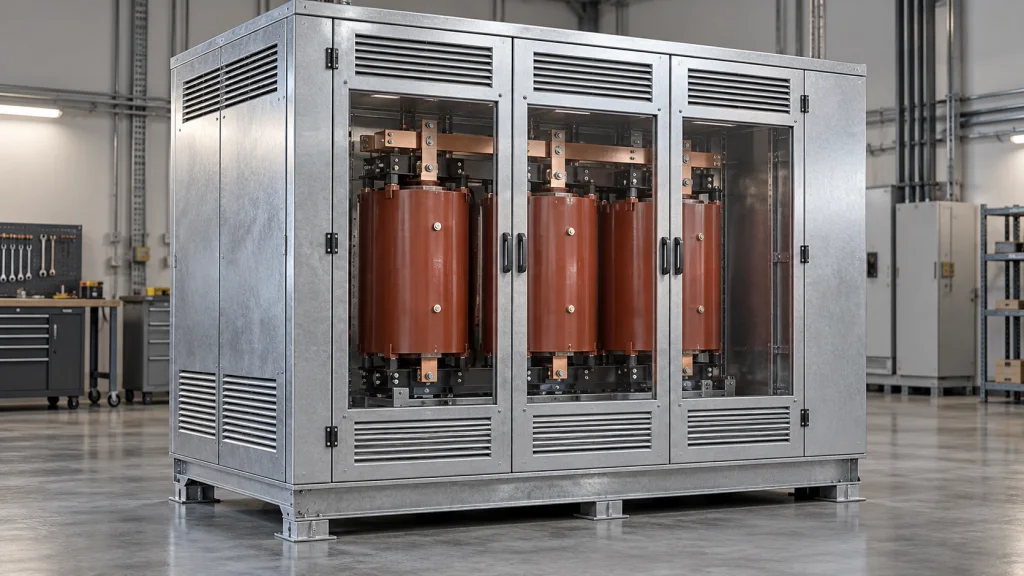
An IP designation does not tell an EPC electrical engineer how an indoor cast resin transformer will be ventilated, reached for service or moved into its room. I start with the room and personnel-access brief before treating enclosure proposals as comparable.
For a fast RFQ input check, gather:
- Dust, humidity, ventilation conditions and personnel-access restrictions.
- The permitted maintenance-access sides and the components that need access.
- Any constrained delivery openings that bidders need to assess.
Ask bidders to state their enclosure arrangement against those inputs. Keep service access and delivery fit as separate questions. 12345
Which inputs define the enclosure specification?
Define the room conditions and personnel-access restrictions, then specify winding construction, enclosure arrangement, the exact IP designation and governing basis separately. Indoor placement alone does not establish touch protection; confirm the proposed enclosure against the actual room before ordering. 12678
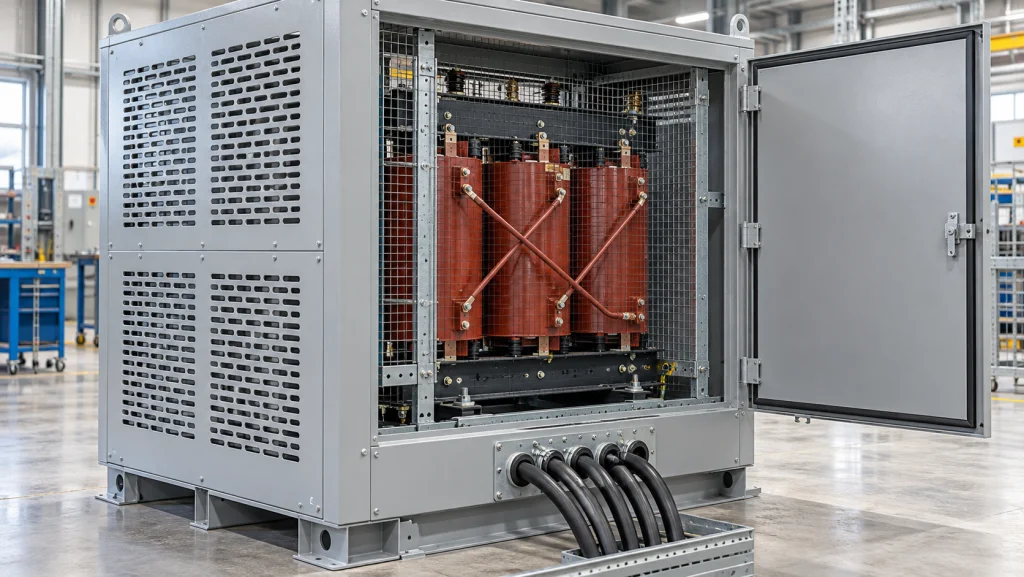
Cast resin construction describes resin-encapsulated windings; VPI describes vacuum-pressure impregnation of an open-wound insulation system. Keep the winding construction separate from the enclosure arrangement.
Indoor placement also needs a personnel-access decision. SGB-SMIT's cast-resin planning guide describes an indoor IP00 construction whose winding surfaces are not safe to touch. LS Electric's cast-resin product data separately lists indoor installation and enclosure options “IP 2X”, “IP 3X” and “IP 4X”. Retain those designations exactly when discussing that product; define the project's requirement from its own room and access brief.
Use separate RFQ fields:
| RFQ field | Entry to define |
|---|---|
| Winding construction | Cast resin; identify a VPI open-wound alternative separately only if invited. |
| Enclosure arrangement | Open or enclosed, matched to the room and access conditions. |
| Exact IP designation | Required designation and the bidder's offered designation. |
| Governing basis | Project-adopted basis; ask which standard and edition apply to the offered enclosure claim. |
Describe dust, humidity, the ventilation path and personnel-access restrictions for the actual room. Ask how the enclosure fits the room dimensions and proposed cable or busbar entry arrangement. Which noise, partial-discharge and temperature-monitoring requirements, if any, need coordination with the room and enclosure, and is a temperature-monitor interface with the protection scheme needed? Before ordering, reconcile the applicable inputs with the offered enclosure configuration. 12678
Which ventilation assumptions support the offered capacity?
Require the bidder to state the cooling mode, capacity and operating assumptions for the offered enclosure. Preserve its ventilation function and obtain manufacturer-defined clearances; an IP designation alone does not establish the capacity available under the stated room conditions. 239
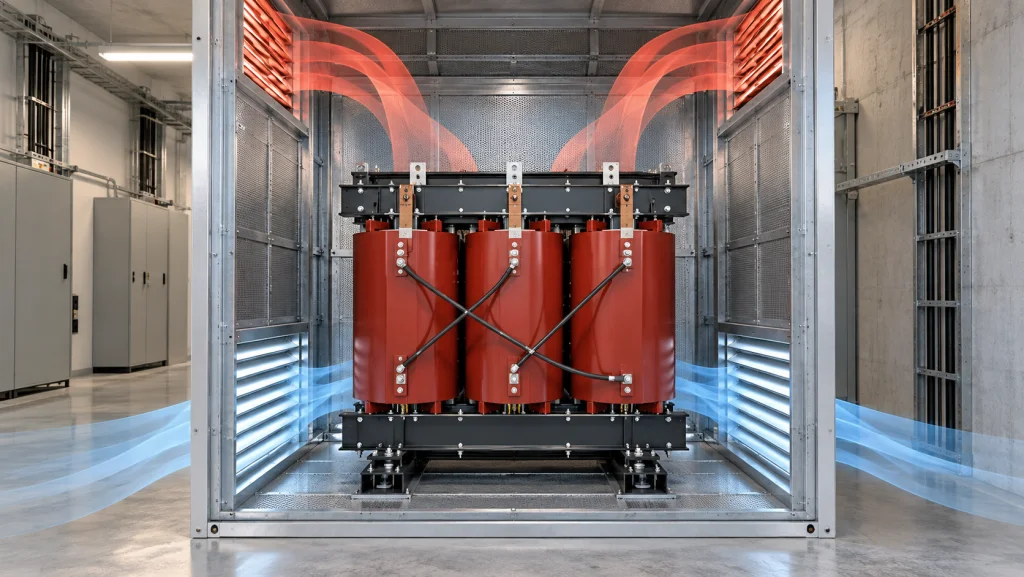
Ask whether the offer uses air natural (AN) or air forced (AF) cooling, and request the capacity and operating assumptions attached to each offered mode. Compare the rating for the proposed enclosure under the stated room conditions, with any proposed restriction or derating identified.
Coil protection, ventilation openings and clearance belong in the same discussion. Virginia Transformer's installation guidance calls for adequate clearance and sufficient ventilation openings, with the manufacturer consulted to determine those requirements. Ask the bidder how the enclosure's ventilation function is preserved in the proposed room layout.
Keep the room ventilation path visible in the review rather than checking only the enclosure footprint. Request the clearances applicable to the offered arrangement instead of inserting a generic distance. Before ordering, reconcile the cooling mode, applicable capacity, operating assumptions, ventilation openings and supplier-confirmed clearances for the same configuration. 239
What service access must the enclosure provide?
Define access by service task, component, permitted side and opening method. Ask the bidder to show the space and handling procedure needed for that arrangement, including the conditions for panel removal and reinstatement before the transformer operates. 234101112
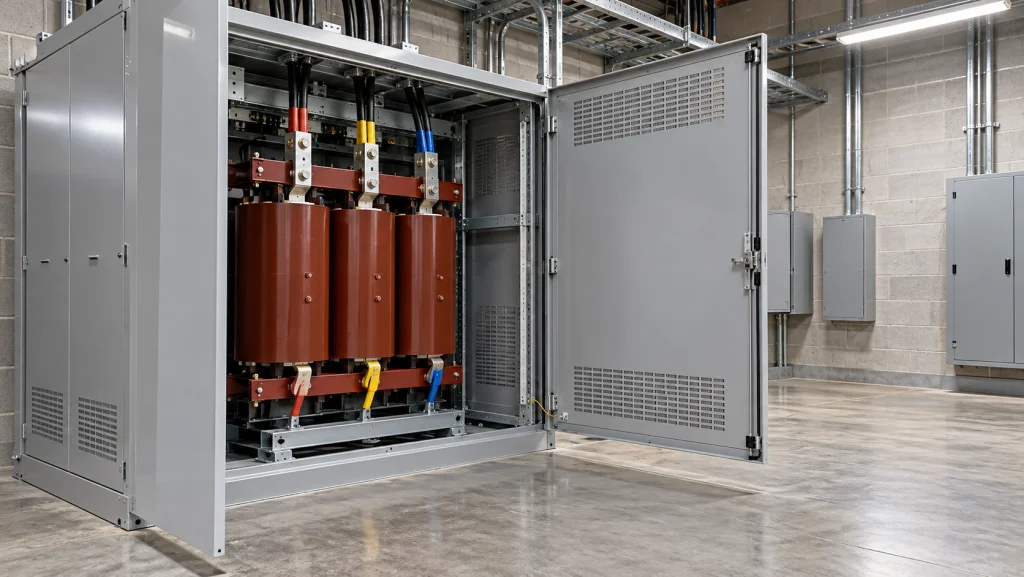
When I review an enclosure drawing, I check how each specified service component is reached from the sides the room permits. Metrolinx's dry-type transformer specification provides an owner-specific example: maintenance access from front or back, not sides, and a removable front cover for terminals. Transport for NSW describes access to the transformer, associated fittings, terminals and tapping links through lift-off lockable doors, hatches or tool-removable covers. Use these as precedents for defining your project's access needs, rather than universal layout rules.
Complete this blank matrix for the service tasks your project specifies:
| Required service task | Component | Permitted access side | Opening method |
|---|---|---|---|
| Terminals | |||
| Tapping links | |||
| Other specified fittings |
Ask the bidder to identify any equipment disconnection or additional access the offered arrangement needs.
Request drawings showing opening movements, panel extraction or lifting space and ventilation clearances, together with the relevant handling instructions. Ask which doors, hatches or dismountable sections form the proposed access arrangement. A Hitachi Energy roof-panel instruction specifies which bolts to remove, warns against removing bolts in other roof panels and specifies lifting hooks. Ask for the handling procedure applicable to the offered enclosure.
Eaton's installation, operation and maintenance manual states: “Do not remove enclosure panels and/or doors when the transformer is energized.” It also states: “Do not energize transformer for operation until the panels are properly installed.” Confirm that the applicable instructions cover the offered model and voltage class. Use that model's instructions and the project's approved safe-work arrangements for the proposed service activity; removable panels do not establish permission for energized maintenance.
Before ordering, check the completed access matrix against the drawings, panel-handling space, ventilation clearances and applicable removal and reinstatement instructions. 234101112
Can the shipped assembly reach the room?
Check the actual shipped assembly against the delivery route separately from maintenance access. Ask the bidder to identify its transport envelope, any permitted enclosure disassembly and the reassembly instructions and responsibilities for that specific configuration. 25
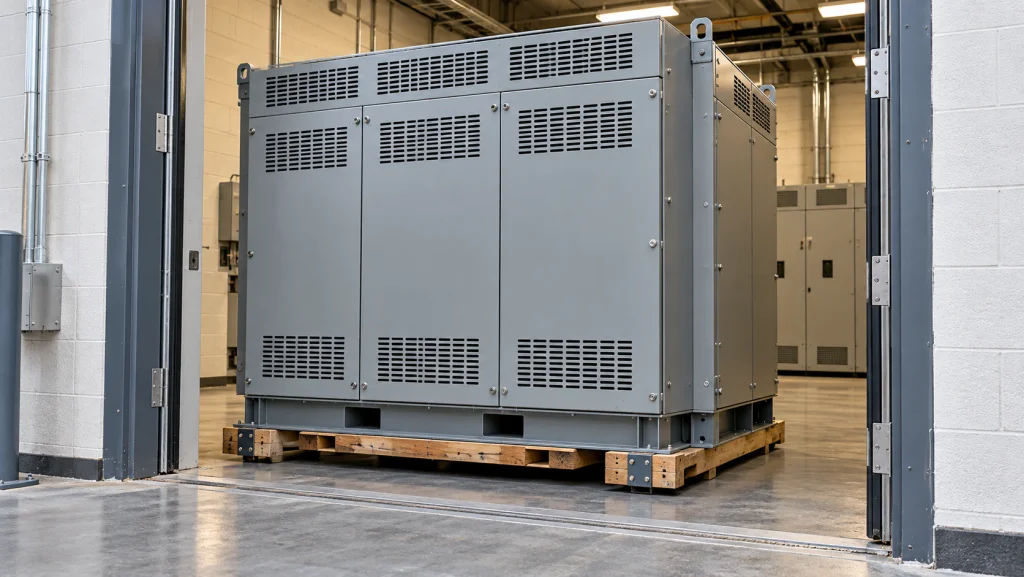
Eaton's dry-type substation transformer guide specification calls for a knockdown case to ease passage through limited openings and separately calls for removable panels to access the core and coils. SGB-SMIT describes a dismountable metallic IP54 enclosure. These are configuration-specific options to confirm; a removable case does not establish that the transformer assembly can pass the route.
Give bidders the relevant route-opening dimensions and ask for the shipped-equipment dimensions, identifying any enclosure parts handled separately. Have the bidder state which disassembly sequence is permitted and what instructions govern reassembly. Ask who is responsible for each activity; enclosure dismountability alone does not establish that the supplier provides site assembly.
Before ordering, compare the confirmed shipping envelope and permitted sequence with the route, then check service access again for the final assembled arrangement. 25
Which evidence and deviations must bidders identify?
Compare enclosure bids in one schedule that records the requirement, offered configuration, supporting document, deviation and remaining confirmation. Link each IP claim to the specific assembly, then resolve differences in ventilation, access, handling and reinstatement before accepting the enclosure proposal. 1234567910111213
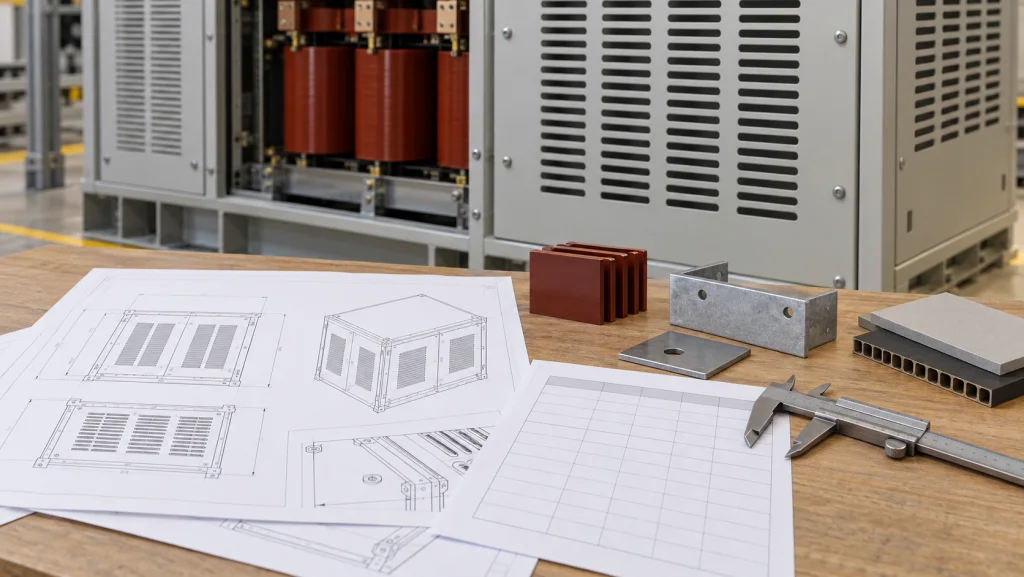
Ask each bidder to identify the model and enclosure drawing or revision covered by its IP claim, including relevant openings, ventilation and proposed cable or busbar entries. If completed testing is claimed, request the report and the model and configuration it covers. Record proposed testing separately and ask the supplier to confirm its availability and scope.
I keep a missing response open until the bidder identifies the offered arrangement and its supporting document. Use the same schedule for every offer:
| RFQ requirement | Offered configuration | Supporting document | Deviation | Confirmation needed |
|---|---|---|---|---|
| Room conditions and access restrictions | ||||
| Construction, arrangement and exact IP designation | ||||
| Governing basis for the enclosure claim | ||||
| Cooling, capacity and ventilation assumptions | ||||
| Component access and service space | ||||
| Shipped envelope and permitted disassembly | ||||
| Removal, safety and reinstatement instructions |
For enclosure-related instructions, Metrolinx provides an owner-specific O&M precedent covering performance and maintenance data, safety precautions, operating instructions and precautions, component-parts availability, and maintenance and troubleshooting guidance. Ask which offered documents address access, handling and reinstatement, and when the bidder proposes to submit them.
A packaged-substation tender requires exclusions and deviations to be substantiated and listed together within its own scope. Use that comparison practice for the enclosure schedule. Before ordering, resolve open entries and agree how each stated deviation is handled; a blank entry does not establish inclusion or acceptance. 1234567910111213
Which Inputs Require Final Confirmation?
An enclosure enquiry can start with the room brief and any available layout or entry drawings. Before ordering, confirm the exact IP designation, cooling assumptions, service and delivery space, handling instructions and reinstatement conditions for one offered configuration. Resolve open entries and record any agreed deviations. 1234579111213
References
- CNEEG. ↩ ↩ ↩ ↩ ↩ ↩
- SGB-SMIT. ↩ ↩ ↩ ↩ ↩ ↩ ↩ ↩ ↩ ↩ ↩ ↩
- Virginia Transformer Corporation. ↩ ↩ ↩ ↩ ↩ ↩ ↩ ↩
- Metrolinx. ↩ ↩ ↩ ↩ ↩ ↩
- Eaton. ↩ ↩ ↩ ↩ ↩ ↩
- CNEEG. ↩ ↩ ↩ ↩
- LS Electric. ↩ ↩ ↩ ↩ ↩
- Source by Spec. ↩ ↩
- Eaton. ↩ ↩ ↩ ↩ ↩
- Transport for NSW. ↩ ↩ ↩ ↩
- Hitachi Energy. ↩ ↩ ↩ ↩ ↩
- Eaton. ↩ ↩ ↩ ↩ ↩
- (DRY TYPE) KVA,CSS TECHNICAL SPECIFICATION FOR. ↩ ↩ ↩