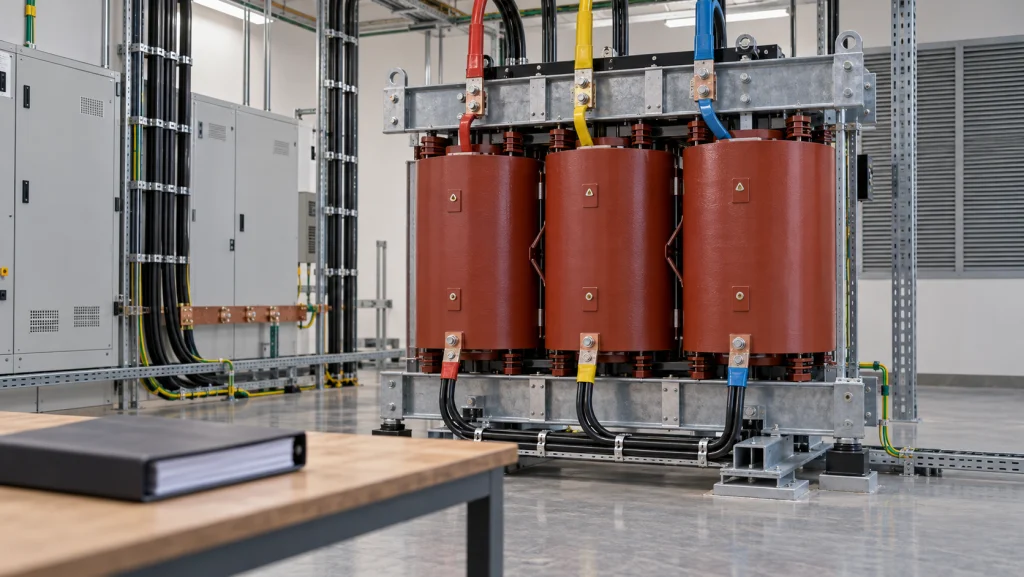
A cast-resin transformer offer stating short-circuit withstand capability still leaves two questions: capability against which fault duty, and demonstrated for which design? As an EPC electrical engineer, you need both answers to assess the offer. I start with the fault inputs and proposed verification route because they determine what the supporting documents need to demonstrate.
Use this fast input checklist:
- Fault-current and duration information, source and transformer impedance assumptions, and distinct RMS and peak-current descriptions.
- Proposed requirements references, editions and acceptance criteria, together with the permitted testing or design-review route.
- Offered cast-resin design identification and the report or calculation proposed to support it.
Treat unresolved inputs as questions for engineering confirmation. Do not fill them from a generic fault-current illustration. 123456
Which fault duty should the RFQ define?
Define the project fault case, current reference and duration before comparing withstand claims. Ask the project engineer to confirm impedance and peak-current assumptions, then separate the duration/heating review from mechanical verification. Keep unresolved study inputs visible in the RFQ. 12
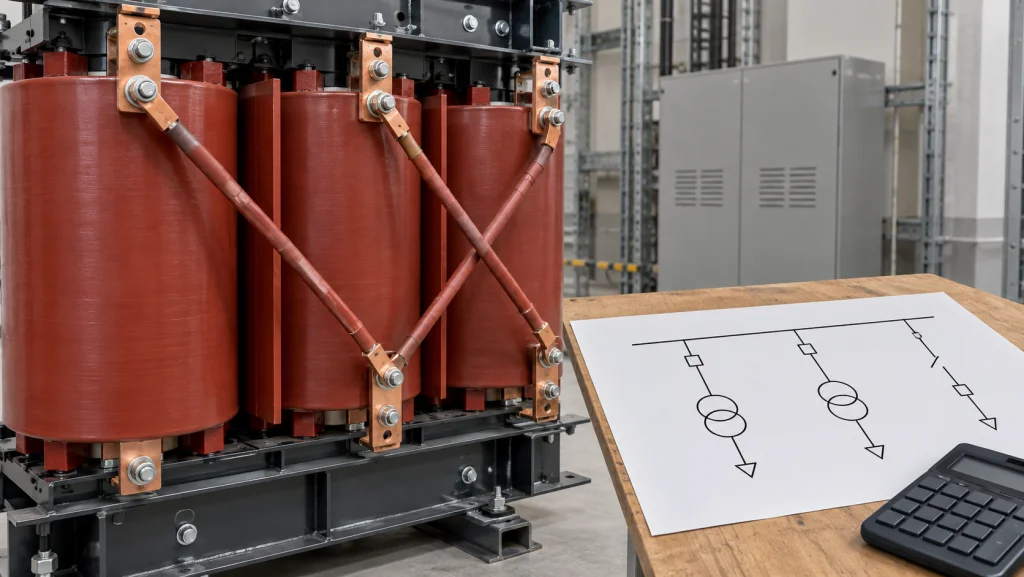
Source and transformer impedance affect fault current. Symmetrical RMS current and the initial peak describe different aspects of the duty. Fault currents generate radial and axial forces: radial forces can expand or compress windings, while axial forces can compress winding sections or drive them apart. Excessive radial stress can crack cast-resin encapsulation or deform a winding even when normal thermal performance is adequate.
Use the following as proposed engineering confirmation questions, rather than a standard-mandated schedule. For every row, record the value or open question, study reference and revision, confirmation status, and person responsible for resolving it.
| Proposed RFQ entry | Question for the project engineer |
|---|---|
| Fault case and location | Which fault case and affected terminal or winding does the duty describe? |
| RMS current and voltage reference | What RMS current applies, and at which voltage reference? |
| Impedance assumptions | Which source and transformer impedance assumptions underpin that current? |
| Peak/asymmetry basis | What peak-current or asymmetry basis should the supplier assess? |
| Protection clearing duration | What duration applies to the specified fault case? |
| Operating and grounding assumptions | Which operating configurations and grounding assumptions need confirmation? |
As a dated specification example, the version of the Saudi Electricity Company specification checked on 2026-10-21 included the field “Short-Circuit Withstand for 2 Seconds, kA” (Saudi Arabia). The two-second duration belongs to that version of the purchaser’s specification; it does not determine another project’s duration or required current. Confirm the applicable revision before using the field as a project requirement.
Before ordering, ask which evidence addresses the specified duration and associated heating duty, and which addresses dynamic mechanical withstand. Keep those review questions separate: normal thermal adequacy alone does not establish mechanical qualification. If the study remains open, ask the supplier to identify its proposed inputs for project engineering review. 12
Which standards and verification routes govern acceptance?
Separate the transformer requirement, test procedure and acceptance criterion in the RFQ. Identify the adopted references and editions, then agree whether testing or a documented design review is acceptable. Calculations need acceptance under the project’s specified conditions. 2345789
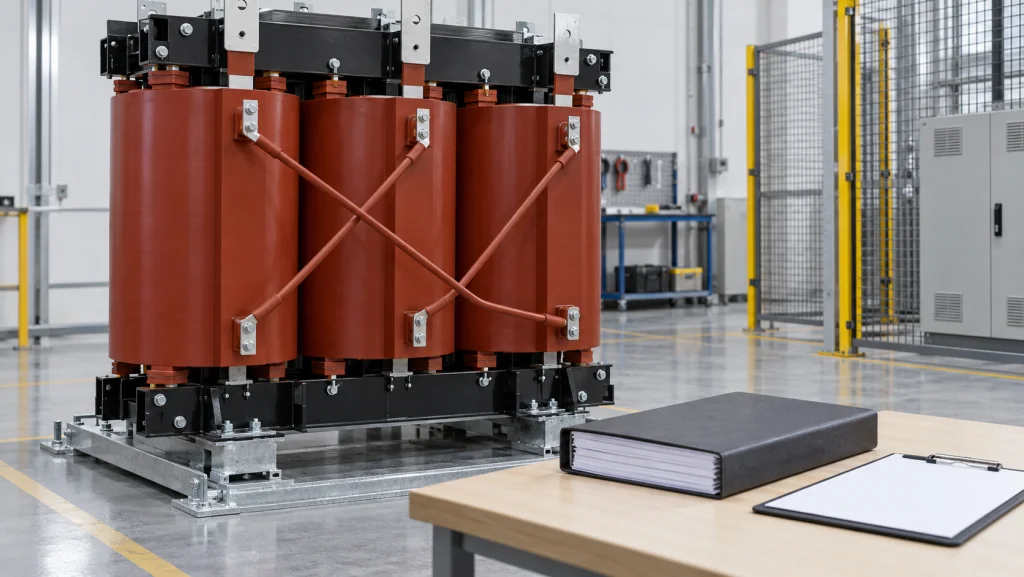
Use a compact reference register to distinguish each document’s role. The IEC transformer references identify the withstand and dry-type product documents below. Reference details checked 2026-10-21; confirm project adoption and applicability to the offered unit separately.
| Reference | Subject and identified metadata |
|---|---|
| IEC 60076-5:2006 | Power transformers - Part 5: Ability to withstand short circuit; Edition 3.0, published 2006-02-07. |
| IEC 60076-11:2018 | Power transformers - Part 11: Dry-type transformers; Edition 2.0, published 2018-08-15. |
| IEC 60076-11:2018/ISH1:2020 | Interpretation sheet 1 for the dry-type product standard; associated with Edition 2.0, published 2020-07-10. |
| IEEE C57.12.01 | General Requirements for Dry Type Transformers; identify the project-adopted edition. |
| IEEE C57.12.91-2020 | Standard Test Code for Dry-Type Distribution and Power Transformers; 2020 revision. |
The IEEE test-code description explicitly places transformer requirements and specific test criteria in appropriate requirements standards, such as IEEE C57.12.01, or user specifications. Record the requirement, procedure and acceptance references separately, with proposed deviations and applicability questions. Listing a standard does not establish product certification.
EPRI describes testing or design review as alternative routes for dynamic withstand verification. Ask whether the project permits a new physical test, applicable prior-test evidence, or documented design review, and what conditions apply. Proposed calculations need assessment against the permitted route; their existence alone does not establish acceptance.
A Transport for New South Wales provision says a withstand test is not required but the manufacturer must provide short-circuit design calculations (Australia; reference checked 2026-10-21). Establish that provision’s product and contractual applicability before adopting it for an indoor cast-resin RFQ.
I keep the verification route open until the project engineer confirms which evidence and conditions the specification accepts. Complete that agreement before ordering. 2345789
Does the evidence match the offered design?
Identify what each document demonstrates, then compare its subject transformer with the offered cast-resin design. Keep impedance/load-loss measurements separate from withstand verification. Request the supplier’s explanation of design differences and assess it against the project’s permitted evidence route. 2561011
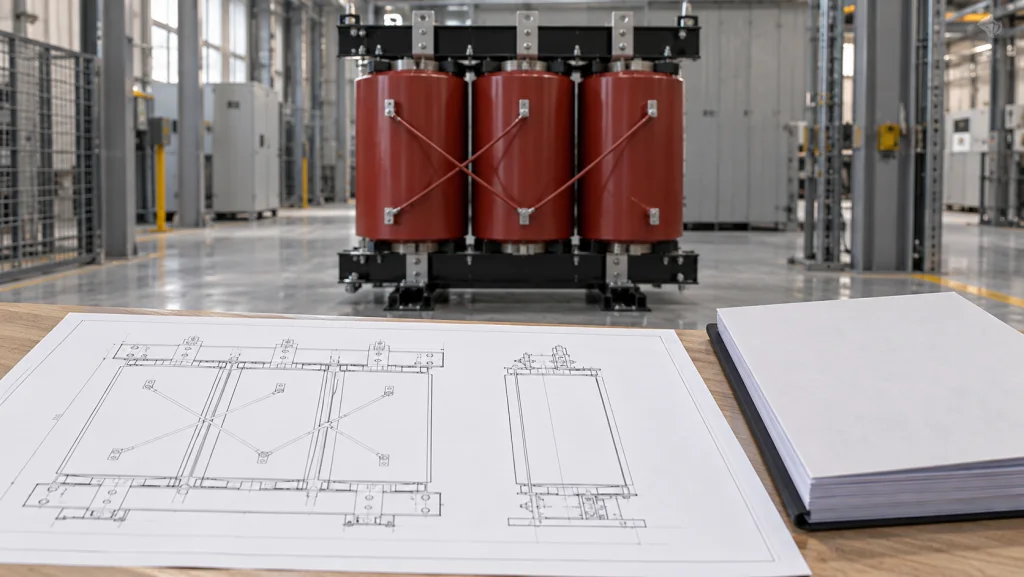
My first question about a report is which transformer and which test it identifies. An unspecified short-circuit-test label leaves that question unresolved. The Eaton dry-type transformer brochure lists measurement of short-circuit impedance and load losses separately from a short-circuit withstand test. A measurement result alone does not establish that withstand testing was completed.
Give those measurements and withstand verification separate RFQ entries, each with its purpose and proposed supporting document. When prior evidence is proposed, use this comparison as a set of review questions:
| Comparison item | Supplier explanation to request |
|---|---|
| Unit identities and ratings | Identify the offered unit and the unit addressed by the report or calculation. |
| Construction | Identify cast-resin or VPI open-wound construction for each design. |
| Winding and support differences | Explain relevant differences in winding geometry, encapsulation or bonding, clamping and structural support. |
| Document references | Link each report or calculation to the design it addresses. |
| Applicability | Explain how the comparison satisfies the project’s permitted verification route. |
The Elkima document directory lists cast-resin mechanical-withstand reports for 630 kVA, 10.5/0.4 kV and 1250 kVA, 33/0.4 kV units. Those listings identify documents to request. Obtain the complete reports before assessing their results or applicability to an offered transformer.
Keep different comparison provisions distinct. A Transport for New South Wales type-test provision conditionally accepts certificates when identical design and construction are demonstrated; establish which tests that provision covers before applying it to withstand evidence. By comparison, MGM’s VPI guide specification calls for core-and-coil design and construction techniques to be verified by a full short-circuit test on similar or larger units in accordance with applicable ANSI standards.
Those are source-specific conditions. Neither a construction label nor a larger tested rating alone establishes qualification for the offered cast-resin unit. Before ordering, have the project reviewer assess the supplier’s applicability explanation and keep unresolved design differences open. 2561011
How should the project review withstand evidence?
Use an agreed evidence matrix to connect fault duty, acceptance references, verification route and offered design. Record document receipt separately from technical acceptance, with deviations and reviewer disposition visible. Agree the submission milestone before ordering. 34611
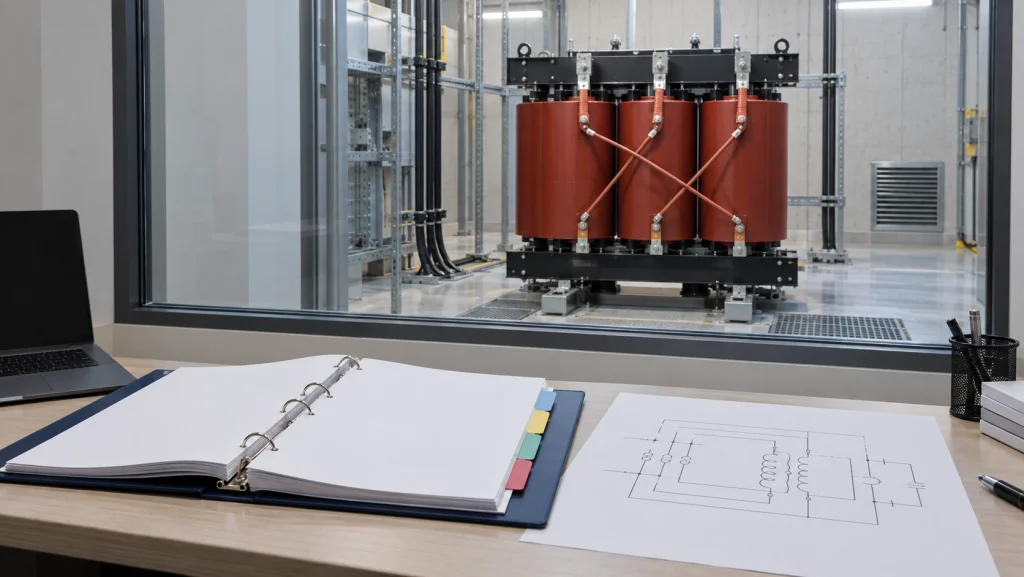
Use these proposed matrix fields for agreement with the supplier and project engineer. They are procurement requests to agree, rather than a universal mandatory document schedule.
| Matrix entry | Information to record |
|---|---|
| Agreed duty and references | Fault-study reference and revision; adopted standards and editions; requirement, procedure and acceptance references. |
| Route and offered design | Permitted verification route; offered-unit identity; design-comparison reference. |
| Supporting document | Requested report or calculation reference; configuration addressed; received/open status. |
| Evaluation and disposition | Evaluation references; deviations or open questions; reviewer and disposition. |
| Submission milestone | Proposed and agreed submission point for each item. |
For a test route, request the tested configuration, conditions, results and evaluation basis. EPRI’s discussion of failure detection and result analysis supports examining the results, including abnormal outcomes, rather than treating a report title as acceptance. For an accepted design-review route, request the assumptions, design applicability and criteria used.
MGM’s VPI guide also calls, when requested, for a certified test report containing minimum information per IEEE C57.12.91. Ask which test that report covers and whether it meets the agreed submission; the report wording does not establish product certification.
I keep document receipt and technical acceptance as separate entries so an open applicability question remains visible. Before ordering, agree how unresolved items will be addressed, confirm the submission milestone, and ask the supplier which evidence exists and whether additional testing can be arranged. 34611
Which Inputs Require Final Confirmation?
Before ordering, agree the fault-duty reference, adopted requirements and acceptance criteria, permitted verification route, and connection between the supporting documents and offered cast-resin design. Start the discussion with your transformer specification and available fault-study references.
Keep unresolved inputs, design differences and deviations visible for project engineering review. The RFQ prepares that review; it does not replace project design or formal acceptance. 12345
References
- Saudi Electricity Company. ↩ ↩ ↩ ↩
- Short-Circuit Withstand Capability of Dry Type Transformers. ↩ ↩ ↩ ↩ ↩ ↩ ↩ ↩
- IEEE Standards Association. ↩ ↩ ↩ ↩ ↩ ↩
- EPRI. ↩ ↩ ↩ ↩ ↩ ↩
- Transport for New South Wales. ↩ ↩ ↩ ↩ ↩ ↩
- Elkima. ↩ ↩ ↩ ↩ ↩
- International Electrotechnical Commission (IEC). ↩ ↩
- International Electrotechnical Commission (IEC). ↩ ↩
- Standards Council of Canada. ↩ ↩
- Eaton. ↩ ↩
- MGM Transformer Company. ↩ ↩ ↩ ↩