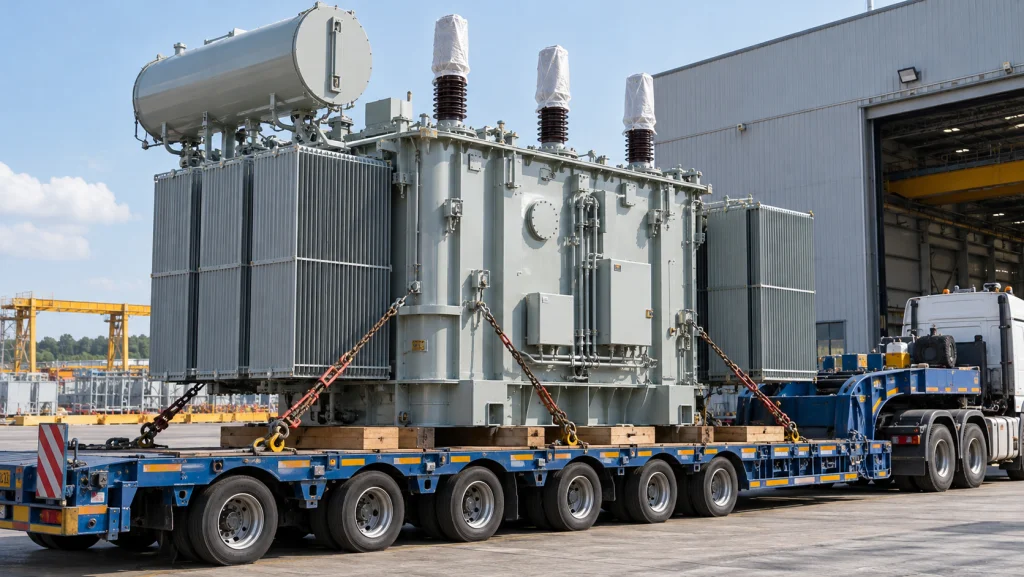
A transformer can reach your site with its factory records in order and still leave the EPC team unable to unload or accept it. I start with the approved unit and the receiving site, then ask who records its condition and who can clear an exception. Fast input checklist: approved rating and drawing revision; transport dimensions and mass; route and site access; tank shipping state and packing list; lifting instructions; required tests and documents; recorder requirements, if any; and the planned storage location. 1234
What Constrains the Route and Unloading Plan?
Set the route and unloading method against the approved unit’s transport dimensions, mass and handling instructions. Carrier access and lifting capacity must work at the receiving site. Confirm site conditions, the lifting equipment and who takes responsibility for unloading before shipment is released. 12

I ask for the transport drawing and documented mass before discussing a carrier or crane. The operating mass may differ from the transport mass when oil or components travel separately, so the lifting plan must identify the figure that applies to the delivered state. Check the permitted lifting points and handling instructions for that configuration; a crane with sufficient capacity does not, by itself, establish the correct lift.
The EPC contractor and carrier also need the actual route and site approach: access width and height, turning space, ground and unloading position, and any restrictions the project has identified. Transport mode can vary with unit size and contract requirements. Record who arranges the carrier, who supplies lifting equipment, who supervises the handoff and where the unit will be placed after unloading.
Give the supplier the site altitude, ambient temperature, pollution and coastal exposure, where relevant, before the configuration and preservation instructions are settled. Confirm the specified cooling method—ONAN, ONAF or a dual rating—tank design—hermetically sealed or conservator—and required protection accessories against those project conditions. Close the drawing, mass, access and responsibility questions in the purchase and delivery documents before ordering. 12
Which Shipping State and Contents Apply?
Specify the approved tank shipping state and list every item travelling separately. An oil-filled, partly filled or dry-nitrogen-charged tank leads to different arrival checks. Confirm the selected state, packed components and any separately supplied oil against the unit documents and packing list before dispatch. 245
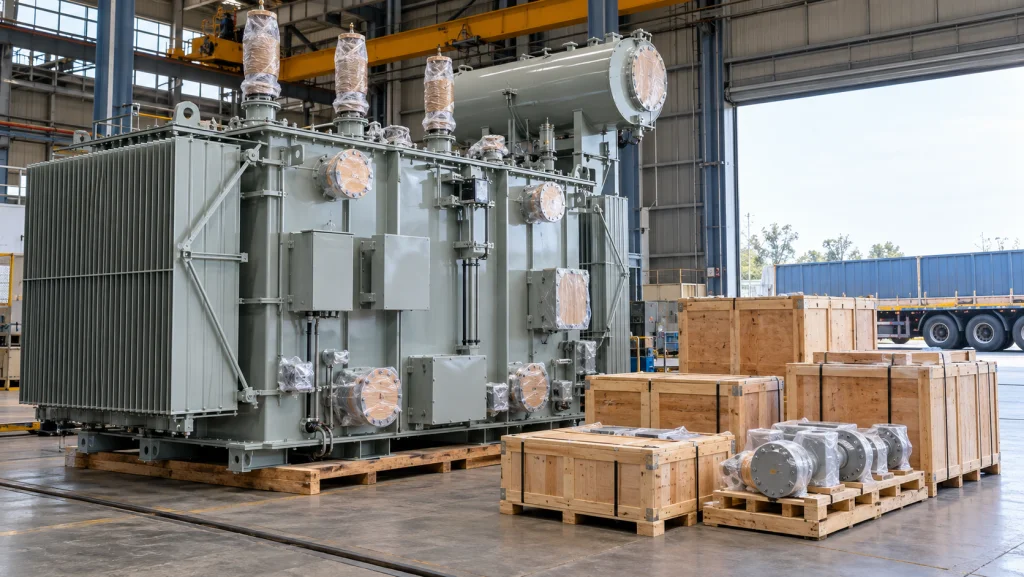
Manufacturer instructions describe several shipping arrangements for liquid-filled transformers. None establishes the correct choice for your unit. The supplier’s approved configuration should state what is in the tank during transport, what is packed outside it and what condition the receiving team must check. That record also needs to match the transport mass used in the lifting plan.
Reconcile separately packed parts against the packing list by description and quantity. Identify which specified items are fitted and which are packed separately, including any applicable radiators, bushings, conservator equipment or protection accessories. For a conservator design, confirm whether the specified Buchholz relay and breather travel fitted or separately; for either tank design, check the required oil and winding temperature indicators and pressure relief device against the approved accessory list. Do not treat an accessory as included because it appears on a general product page.
If insulating oil is delivered separately, identify its containers and the project’s acceptance instructions. A visual check described in one manufacturer manual is a limited receiving step, not a substitute for any oil test the project requires. The oil-immersed transformer range provides product context; the approved unit documents must settle its shipping state and contents before ordering. 245
Which Records Are Needed Before Dispatch?
Agree a dispatch release pack for the named unit and approved revision, including identity, handling instructions and packing contents. Add test reports and FAT records only where the contract requires them. Confirm that each required record matches the offered configuration before authorizing shipment. 346

The receiving team needs a common reference for what was approved and what is arriving. Put the equipment tag or serial identity, approved datasheet and drawing revisions, nameplate information, shipping state, transport mass, handling instructions and packing list into the agreed record schedule. A revision mismatch stays open until the supplier and project reviewer resolve it; the latest file in an email thread is not automatically the approved one.
I treat FAT as one possible release input, not as a replacement for the packing and handling records. Where a witness FAT, remote FAT, third-party inspection or particular test report is required, agree the scope and witness arrangement in advance. Keep the signed acceptance record or report for each required test, tied to the named model and configuration. If a report or approval is missing, record that line as open rather than describing the unit as cleared.
The Testing & FAT page gives context for discussing test arrangements. Before ordering, confirm the project’s actual test schedule, document list, required revisions and authority to release the shipment. 346
How Are Transit Events Tracked and Reviewed?
If the project specifies transit monitoring, agree how the recorder is mounted, activated and read. Its settings and any response to an event must follow the approved unit and contract. Name the alert contact, record custodian and technical reviewer before dispatch. 5789

A recorder helps only if its readings can be tied to the transformer’s journey and reviewed against agreed criteria. Confirm whether monitoring is required at all. If it is, specify the device, mounting position, activation at dispatch, clock setting, battery or recording capacity, and whether it remains on the unit through unloading. A utility bid can require a three-direction recorder to travel with the transformer; that requirement applies to that procurement, not automatically to yours.
Set any alert or impact limits from the approved manufacturer transport instructions and project specification. Manufacturer and risk guidance give different numerical examples and responses, so neither a published number nor an automatic return-to-factory rule should be copied into another contract. Name who receives an alert during transit, who holds the record, who downloads or reads it at arrival and who decides whether further inspection is needed. Retain the record with the receiving documents, including a record of any interruption or missing device.
Before ordering, confirm the monitoring clause and the technical review route for an abnormal reading. Leave the exact threshold and disposition open until the approved unit and contract define them. 5789
What Must Be Recorded Before Unloading?
Make the carrier handoff a documented condition check before the transformer leaves the vehicle. Match its nameplate identity to the approved order, then record visible damage, movement, restraints, leaks and shipment contents. Add pressure or recorder readings only where the shipping configuration calls for them. 134810

The receiving plan should name the person who inspects and records the unit while the carrier is present. Start with the equipment tag and nameplate characteristics, then compare them with the approved unit record. Photograph the condition and note any movement, impact marks, bent or broken restraints, dents, coating damage or oil leaks before unloading changes the scene.
Check the tank, bushings, radiators and other fitted parts that actually belong to the configuration. Record damage or missing items against the accessory and packing lists; separately packed crates should be counted and identified without assuming their contents are complete. Where the approved shipping state includes a pressure or vacuum indication, record the applicable reading and ambient condition under the unit instructions. Where an impact recorder is specified, preserve its arrival reading and record. A tank shipped in a different state may call for different observations.
Ask the carrier representative and the project’s receiving representative to acknowledge the condition record under the agreed handoff procedure. A satisfactory visual record describes what was seen at receipt; it does not settle every electrical or internal condition. Before ordering, agree the checklist, photographs, signatories and any required hold point before unloading. 134810
Who Decides When Receipt Exceptions Are Cleared?
Name the notice recipients, technical reviewer and release authority before a damaged or incomplete shipment arrives. Record the condition and keep the affected step open while the specified tests or inspection are reviewed. The owner’s procedure and contract decide whether unloading or further work can continue. 91011
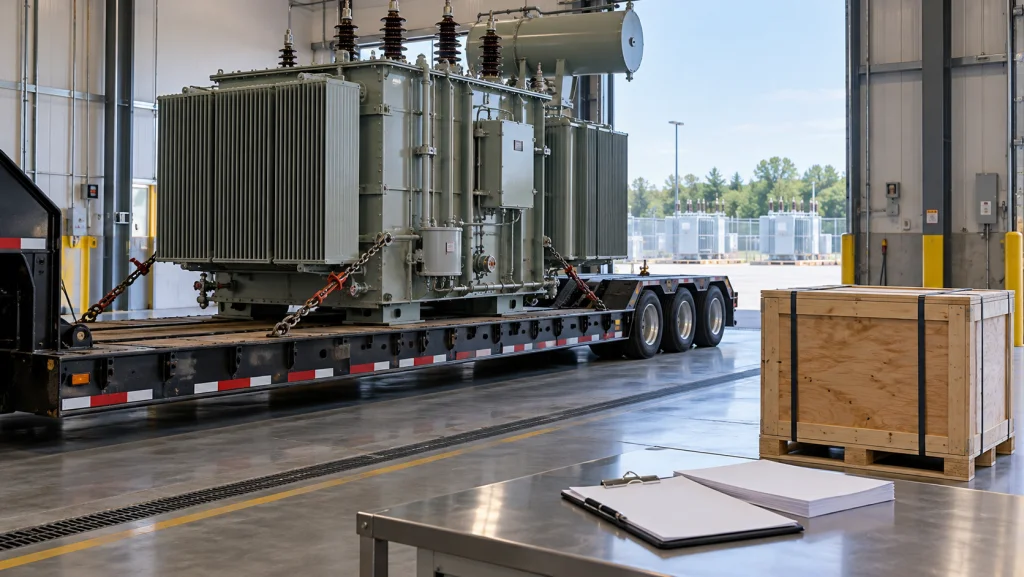
An exception can be visible damage, an abnormal transport reading, a missing packed item or an outstanding project-required test. Agree who notifies the supplier, carrier and owner; what photographs, readings and documents accompany the notice; and who decides the next action. Damage should be reported promptly, while the contractual notice period and claims responsibility must be checked in the purchase and transport terms.
PacifiCorp’s transformer receiving procedure shows why the owner’s instructions need review before dispatch. In its stated ship, rail car or trailer transport circumstances, it requires a core-ground test of each individual core-ground connection before unloading. It also requires an internal inspection for transformers shipped without oil unless the owner waives it. Those are PacifiCorp procedure conditions, not universal receiving tests. Your project must specify whether comparable hold points apply, who performs any required test, what acceptance record is retained and who can waive or release the hold.
An impact exceedance may call for substantial technical review under risk guidance, but the remedy for your unit must be decided under its approved criteria. Before ordering, record the exception path and release authority alongside the unloading plan. 91011
How Is the Unit Preserved After Receipt?
Agree the storage position, inspection owner and unit-specific preservation instructions before delivery if installation or energization may be delayed. The tank’s shipping state and separately packed items affect what must be protected and checked. Confirm the permitted storage conditions and inspection schedule with the supplier before ordering. 2412
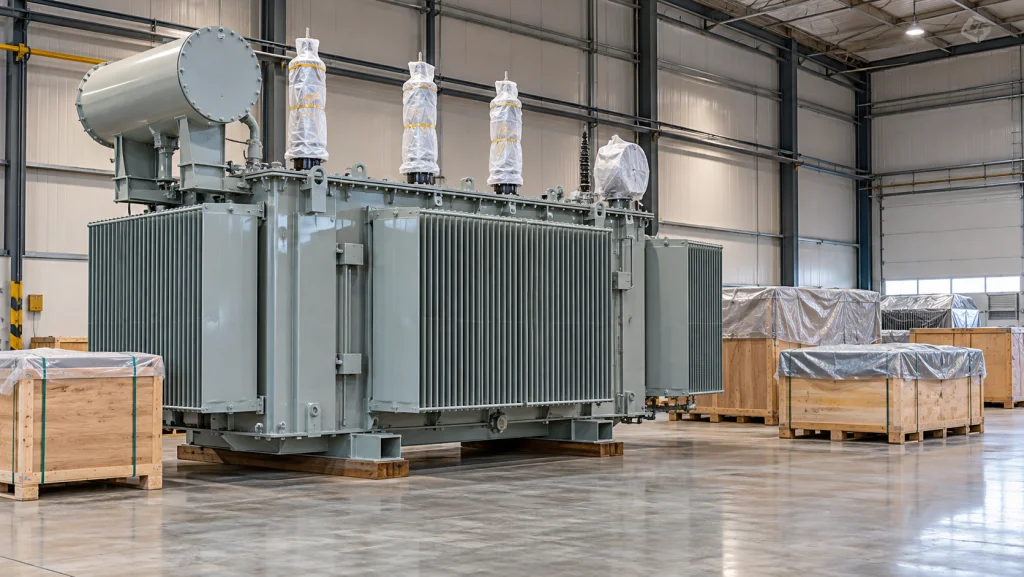
Receiving does not end when the carrier leaves. The project team needs to know where the transformer and each separate crate or oil container will remain, who checks their condition and where those observations are recorded. Tie the preservation plan to the approved tank state, fitted accessories, packaging and the site’s exposure to weather, moisture, dust and physical damage.
Manufacturer instructions differ. One manual permits outdoor storage for its oil-filled units with periodic condition checks; another calls for clean, dry indoor storage in original cartons for delayed installation. Neither instruction supplies a default location or inspection interval for every outdoor distribution or power transformer. A hermetically sealed tank also does not remove the need to follow its oil and condition checks.
If the schedule changes after receipt, ask the supplier which instructions apply to the actual unit and separately delivered materials. Before ordering, agree the storage location, inspection responsibility, records and the point at which the preservation plan must be reviewed. 2412
Which Inputs Require Final Confirmation?
Send the project requirement or equipment list with the oil-immersed transformer rating, voltage ratio, frequency, vector group, impedance, cooling method, tank design, required accessories, site conditions and test or document requirements.
Add the route, unloading access, intended shipping state and expected receiving or storage arrangements. If a full datasheet is not ready, a single-line diagram, load list or nameplate gives us a starting point for identifying the questions to settle before shipment. 1234

References
- Sönmez Trafo. ↩ ↩ ↩ ↩ ↩ ↩
- Virginia Transformer Corp.. ↩ ↩ ↩ ↩ ↩ ↩ ↩ ↩
- Prolec Energy. ↩ ↩ ↩ ↩ ↩ ↩
- Magnetron. ↩ ↩ ↩ ↩ ↩ ↩ ↩ ↩ ↩ ↩
- Yawei Transformer. ↩ ↩ ↩ ↩
- 12 Essential Power Transformer FAT Checks Before Shipment. ↩ ↩
- Greenville Utilities Commission. ↩ ↩
- Prolec-GE Waukesha. ↩ ↩ ↩ ↩
- AIG. ↩ ↩ ↩ ↩
- PacifiCorp. ↩ ↩ ↩ ↩
- Siemens. ↩ ↩
- Edison Transformer. ↩ ↩