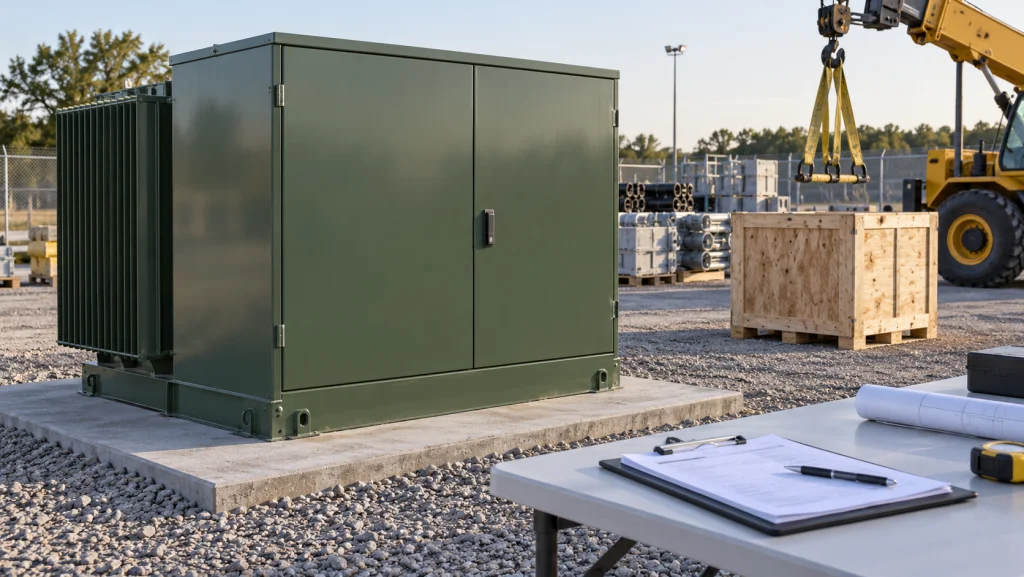
A receiving signature can leave an EPC electrical engineer uncertain about what was inspected, whether the nameplate matches the order and which issues remain open before service. I separate condition, order conformity and energization decisions because each needs a record that answers its own question.
For record preparation, agree this fast input checklist with your selected supplier and project team:
- The manual confirmed applicable to the ordered equipment.
- The approved requested characteristics and a place to capture actual nameplate data at reception.
- Pre-unloading condition observations and the transport-company claim procedure if rough handling is evident.
- Dated condition observations and storage dates, including whether storage exceeds six months.
- References for applicable electrical-safety checks and the project’s energization authorization.
Prolec’s three-phase pad-mounted transformer instructions provide the technical basis for the discussion below. The proposed record fields need supplier and project-team confirmation. Confirm manual applicability rather than transferring Prolec’s instructions automatically to another manufacturer’s unit. 1
Which documents govern the receiving inspection record?
Use the supplier-confirmed manual for the ordered transformer. Prolec instructs users to understand its manual before reception. For the receiving record, agree equipment identity, controlled manual revision, approved order reference and inspection-plan reference with the selected supplier and project team. 1
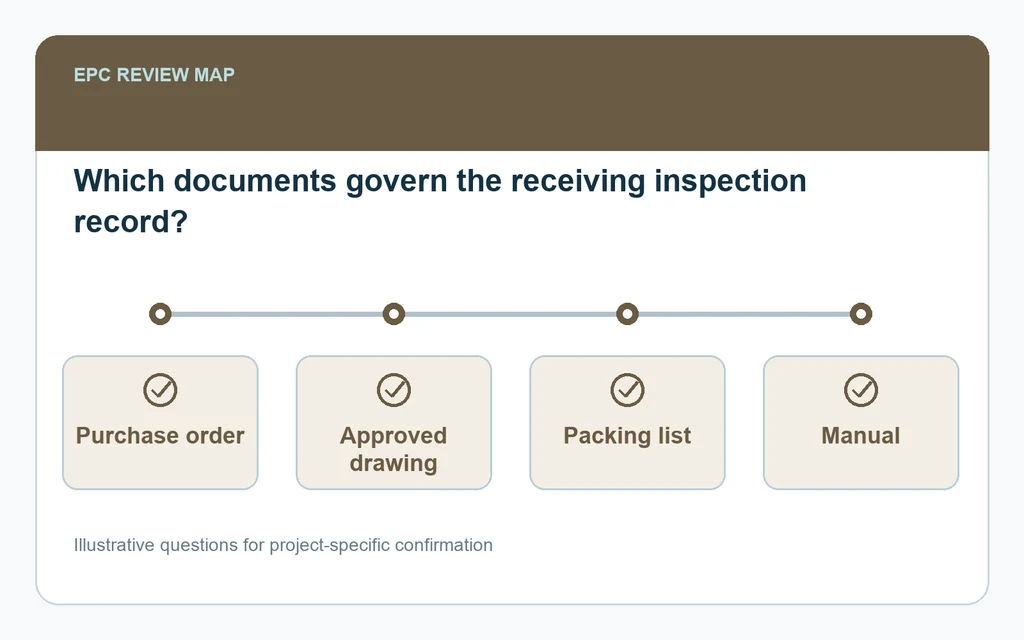
Prolec’s three-phase pad-mounted transformer manual contains a dedicated Receiving Inspection section. It instructs users to read and understand the manual before receiving, installing, operating or maintaining the transformer. Establish that document basis before adopting a receiving form.
A proposed reference block can identify:
- The equipment covered by the record.
- The applicable controlled manual revision.
- The approved order reference.
- The inspection-plan reference.
Agree these proposed fields with the selected supplier and project team. The linked PDF provides the manual reference discussed here; ask the selected supplier to confirm the controlled revision applicable to your unit.
Before ordering, agree the reference block and how its manual applicability will be confirmed, so the receiving record identifies the intended equipment and governing documents. 1
What should inspectors record before unloading?
Record the transformer’s condition before unloading, because Prolec requires meticulous inspection while it remains on the truck or trailer. Agree timestamps, equipment identity, observations and available photographs as record fields. If rough handling is evident, Prolec directs a transport-company damage claim; track technical disposition separately. 1
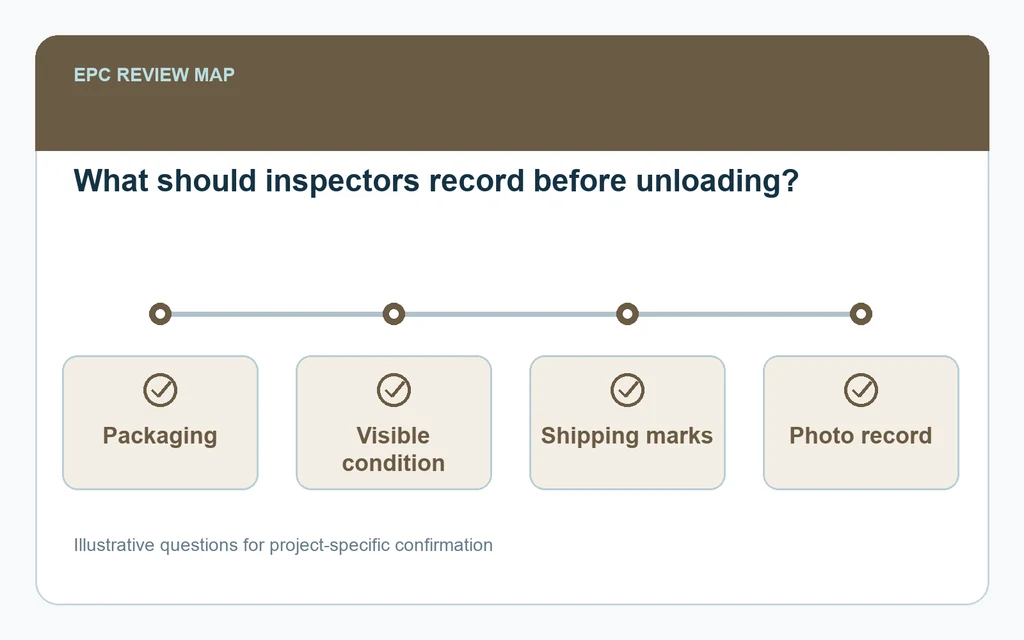
The timing fixes which condition the receiving observation describes. Preserve the observation made before unloading rather than allowing a later inspection entry to stand for that earlier condition.
For an electrical-contractor project engineer, a compact proposed arrival record is:
| Proposed entry | What to record |
|---|---|
| Inspection time | Date and time of the observation before unloading |
| Equipment identity | Identifier used for the transformer in the receiving record |
| Observed condition | Description of the visible condition, linked to the affected item |
| Attachments | References to photographs, where available |
Prolec’s claim instruction is conditional: if rough handling is evident, file a damage claim with the transport company. Link the observation and any available photographs to the claim reference. Keep the claim status separate from the transformer’s pending technical disposition.
Submitting a claim does not, by itself, decide whether the transformer can be accepted or put into service. The record should preserve both the observed condition and the unresolved technical question without treating one as an answer to the other.
Before ordering, confirm the proposed fields and applicable claim procedure with the selected supplier and project team. Ask what notification timing applies and how unloading and technical-disposition decisions will be recorded; do not infer those decisions from the brief inspection and claim instructions. 1
How are ordered characteristics checked against nameplate data?
Compare the characteristics actually specified in the approved order with the actual transformer nameplate, as Prolec instructs. A proposed comparison table should link each order entry to its nameplate transcription or image reference, comparison result and unresolved difference, with the format agreed before ordering. 1
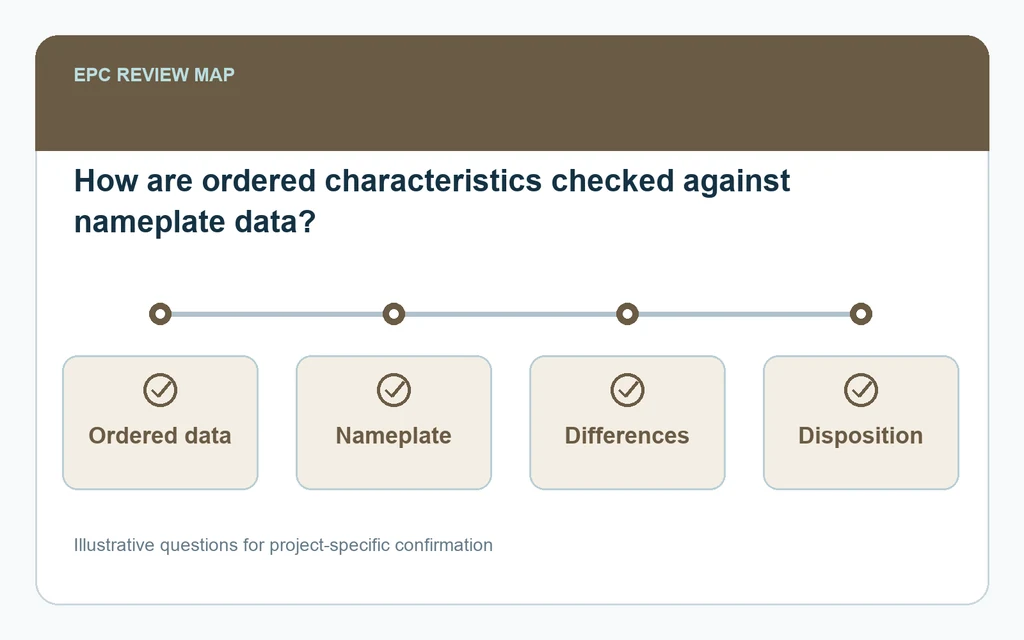
I compare the approved order with the actual nameplate field by field, because an observation about delivery condition does not answer whether the requested characteristics match. Prolec expressly directs comparison of requested transformer characteristics with those indicated on the nameplate.
Use this proposed table structure for discussion:
| Approved order characteristic and value | Actual nameplate transcription or image reference | Comparison result | Unresolved-difference reference |
|---|---|---|---|
| Enter each characteristic actually specified | Record the corresponding nameplate entry or image reference | Record the comparison, or keep the item open | Link any unresolved difference |
Build the rows from your actual approved requirements. Transcribe what the received nameplate shows rather than filling a cell with the expected value. Where entries differ, or the comparison cannot yet be completed, keep the row open and identify the point requiring resolution.
Before ordering, agree the table and discrepancy process with the selected supplier and project team, including how unresolved differences will be recorded and addressed. Assess conformity against the actual approved requirements and actual nameplate data; the proposed table itself establishes no result for a delivered unit. 1
How does storage affect pre-service inspection records?
Record storage dates and preserve dated condition observations from reception and before service. Prolec calls for damage inspection at both stages; after storage exceeding six months, winding insulation-resistance and power-factor field tests are recommended. Confirm test procedures and acceptance criteria with the selected supplier and project team. 1
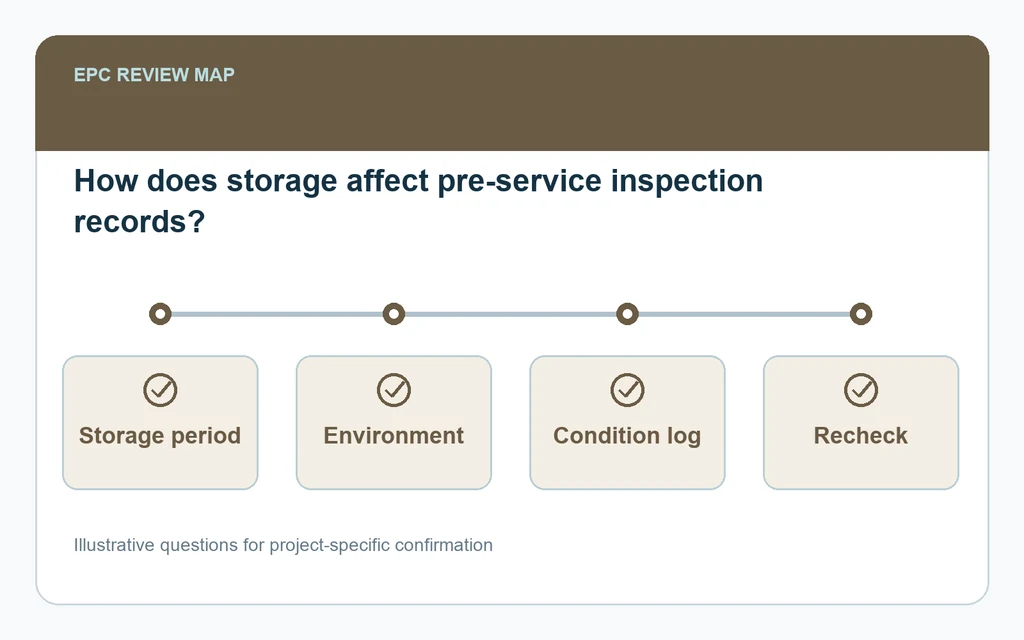
An arrival observation describes condition at that time. Prolec also directs damage inspection immediately after equipment reception and before putting the transformer into service, covering damage that may have occurred during shipment or storage. Earlier receipt observations cannot establish condition after subsequent handling or storage.
For condition history, propose dated entries for the observed condition, references to earlier findings and their recorded disposition. Add storage start and end dates so your team can identify whether the more-than-six-month recommendation applies. Confirm this record arrangement with the selected supplier and project team.
If the transformer has been stored for more than six months, Prolec’s manual recommends these field tests:
- Insulation resistance of each winding to ground and between windings.
- Power factor of each winding to ground and between windings.
Prolec recommends these tests if storage exceeds six months. Storage of six months or less does not establish satisfactory condition. The recommended tests also do not replace the separate inspection for shipment or storage damage before service.
Refer the applicable test procedures, acceptance criteria and authorized execution to the selected supplier and project team. Use the complete applicable procedures rather than treating the recommendation as a test method. A storage-duration entry identifies whether the recommendation applies; it is not a completed test result.
Before ordering, agree how storage dates, condition findings, their disposition and any applicable test records will be linked, and how the recommendation will be addressed if storage exceeds six months. 1
How does receiving sign-off differ from energization authorization?
Receiving sign-off does not establish completion of electrical-safety checks or authority to energize. Prolec separately addresses isolation and terminal grounding before electrical-part handling, and checks before voltage application. Keep receiving status, applicable safety-check records and project energization authorization separately identifiable in the proposed record. 1
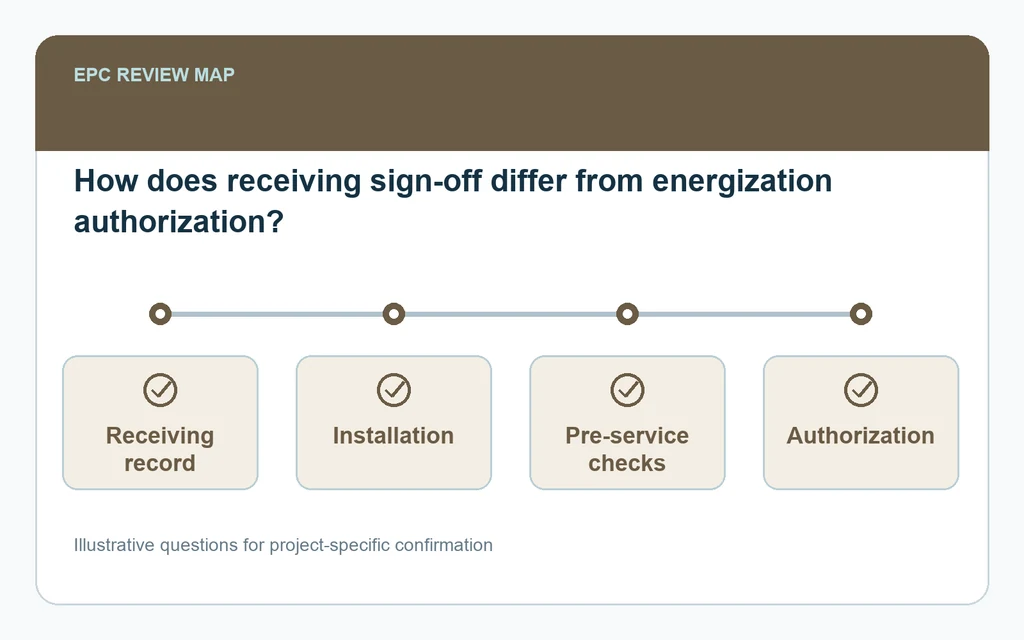
Before handling any electrical part, Prolec instructs that the transformer must be disconnected from all sources of electrical energy and its terminals grounded. The manual separately addresses checks before applying voltage, including neutral grounding, cleaning—especially the porcelain bushings—bushing condition and keeping people away from the transformer before energization.
Those instructions concern electrical-safety and pre-voltage checks, which a receiving signature alone cannot establish as completed. The partial extracts discussed here are not a complete executable checklist.
Propose separate record references for:
- Receiving and condition status.
- Records of the applicable electrical-safety checks.
- The project’s energization authorization.
Before ordering, confirm this arrangement with the selected supplier and project team. Use the complete applicable procedures for electrical work and voltage application, and confirm who holds the project’s release authority. Do not infer that authority, or completion of the separate checks, from receiving sign-off. 1
Which Inputs Require Final Confirmation?
Agree the proposed receiving record with the selected supplier and project team before ordering, and keep receiving status separate from technical disposition, electrical-safety records and authorization to energize.
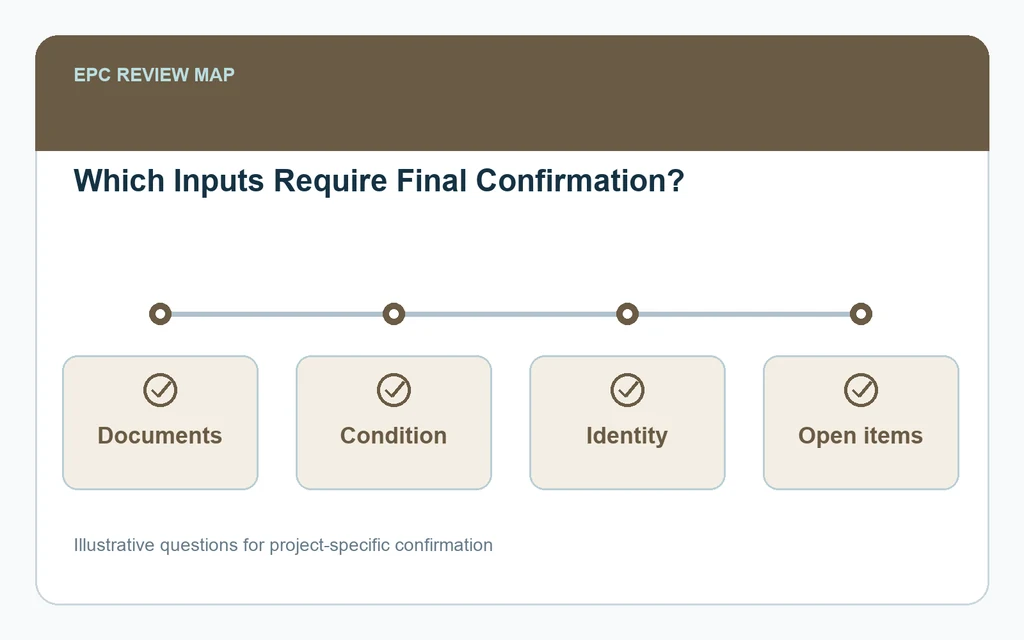
Before ordering, review the proposed receiving record with the selected supplier and project team using the requested characteristics and the manual reference for the intended unit. Agree how it will capture the pre-unloading inspection, nameplate comparison, any conditional transport-company claim and later condition reviews. Confirm how storage exceeding six months will be addressed.
Keep receiving status separate from technical disposition, electrical-safety records and authorization to energize. Read each sign-off for the checks it records, and keep unresolved points visible until the relevant review or decision is recorded. 1